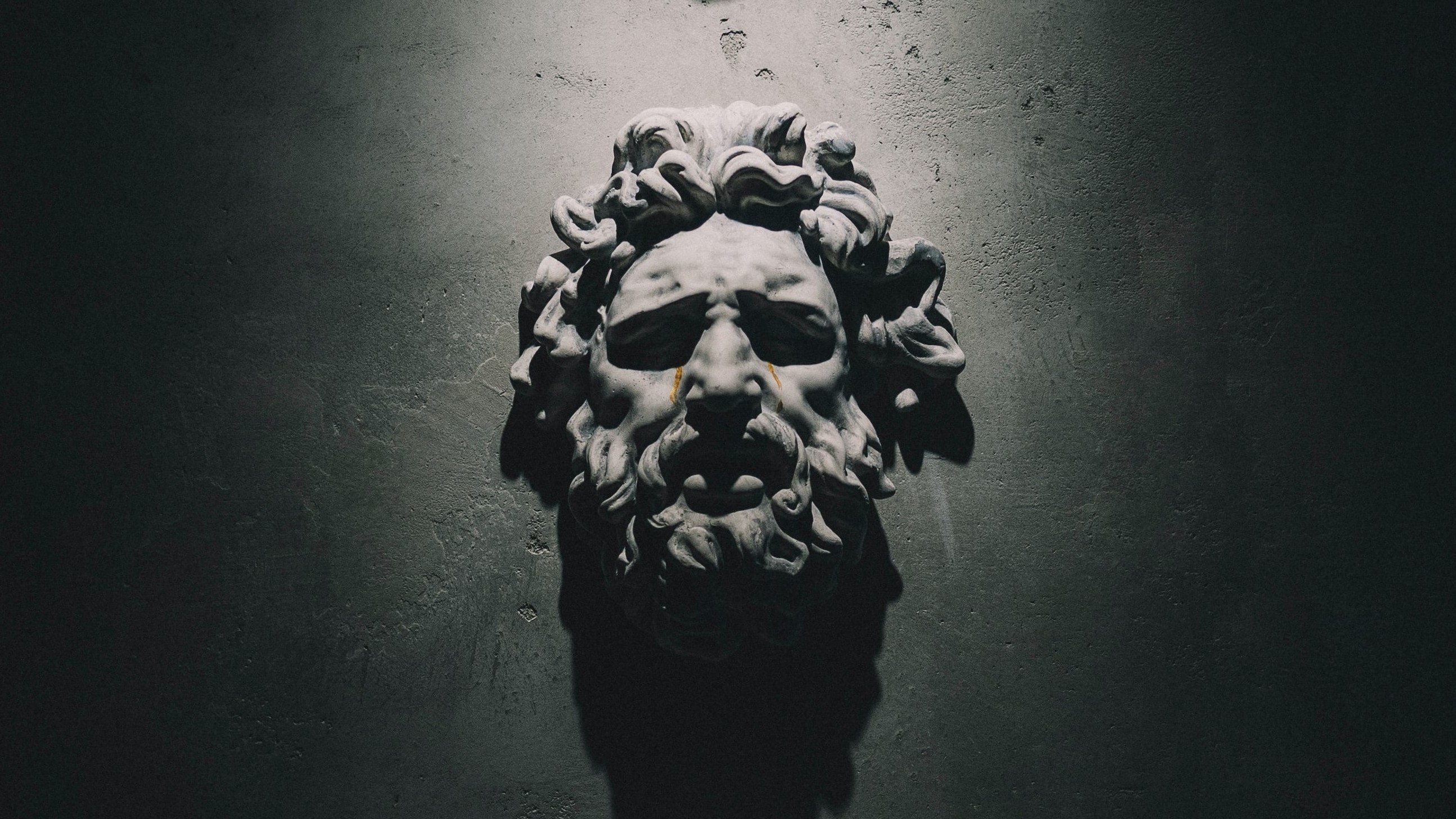
Agamemnon's Shadow Speaks by Nina Kossman
Too many thoughts
mind too small
crowded there
inside
he said
Give me more brain
make me a genius
or else
I'll steal your cow
I'll make war
I'll kill your men
you kill mine
said Agamemnon
or one of the other pot-bellied kings
too many men
too little bread
what to do
let's make war
said he of the big belly
and of the big mustache
chief of the walled city
Mycenae
maybe no worse than Troy
our women you know
they don't run around
from city to city
like what's her name
because of whom this war
they stay put
inside the walled city
they don't betray you with a stranger
better with the next of kin
when they kill you
it's straightforward
in a bathtub
with a fishnet
you come home from work—and bam!
no time to regret
no big war
no Troy
no army
it's between you and your spouse
and maybe your concubine
Cassandra
why was she underfoot
she with her prophecies
so she goes too
not too much blood
very orderly
then your spouse rules
with her new spouse
he next of kin
we're all blood relatives here
call my slaves
wash off my blood
until my bathtub is sparkling clean
I told this story too many times
feeling tired now
said Agamemnon's shadow
Bio
Nina Kossman is a Moscow-born poet, playwright, writer, painter, and translator
of Russian poetry. Her short stories and poems in English have been published in journals
in the United States, the United Kingdom, and Canada. Among her published works are three
books of poems in Russian and English, two volumes of translations of Marina Tsvetaeva’s
poems, two collections of short stories, and a novel. For Oxford University Press, she
edited the anthology Gods and Mortals: Modern Poems on Classical Myths. Her writing
has been translated into Greek, Japanese, Russian, and Spanish, and she is the recipient
of a UNESCO/PEN Short Story Award, an NEA translation fellowship, and grants from Foundation
for Hellenic Culture, the Onassis Public Benefit Foundation, and Fundación Valparaíso.
She lives in New York.
Author's note
From Nina Kossman's introduction to Gods and Mortals: Modern Poems on Classical Myths (Oxford University Press, 2001): "If we think we now know the answers, it is because the questions were first posed in antiquity. If we now see far, it is because we stand on the shoulders of tradition. Myths belong to us as much or as little as the imagery of our own unconscious: the deeper we dig into our psyches the more likely we are to stumble upon an ancient myth. Our ancestors are us or we are our ancestors: the texture of our bones is passed on, along with the texture of our dreams. And perhaps it is because the myths echo the structure of our unconscious that every new generation of poets finds them an inexhaustible source of inspiration and self-recognition."