Note to reader: this piece looks best when viewed on a larger screen. Some formatting may not display correctly on mobile.
Why Cupid Visits Tuscany by LindaAnn LoSchiavo
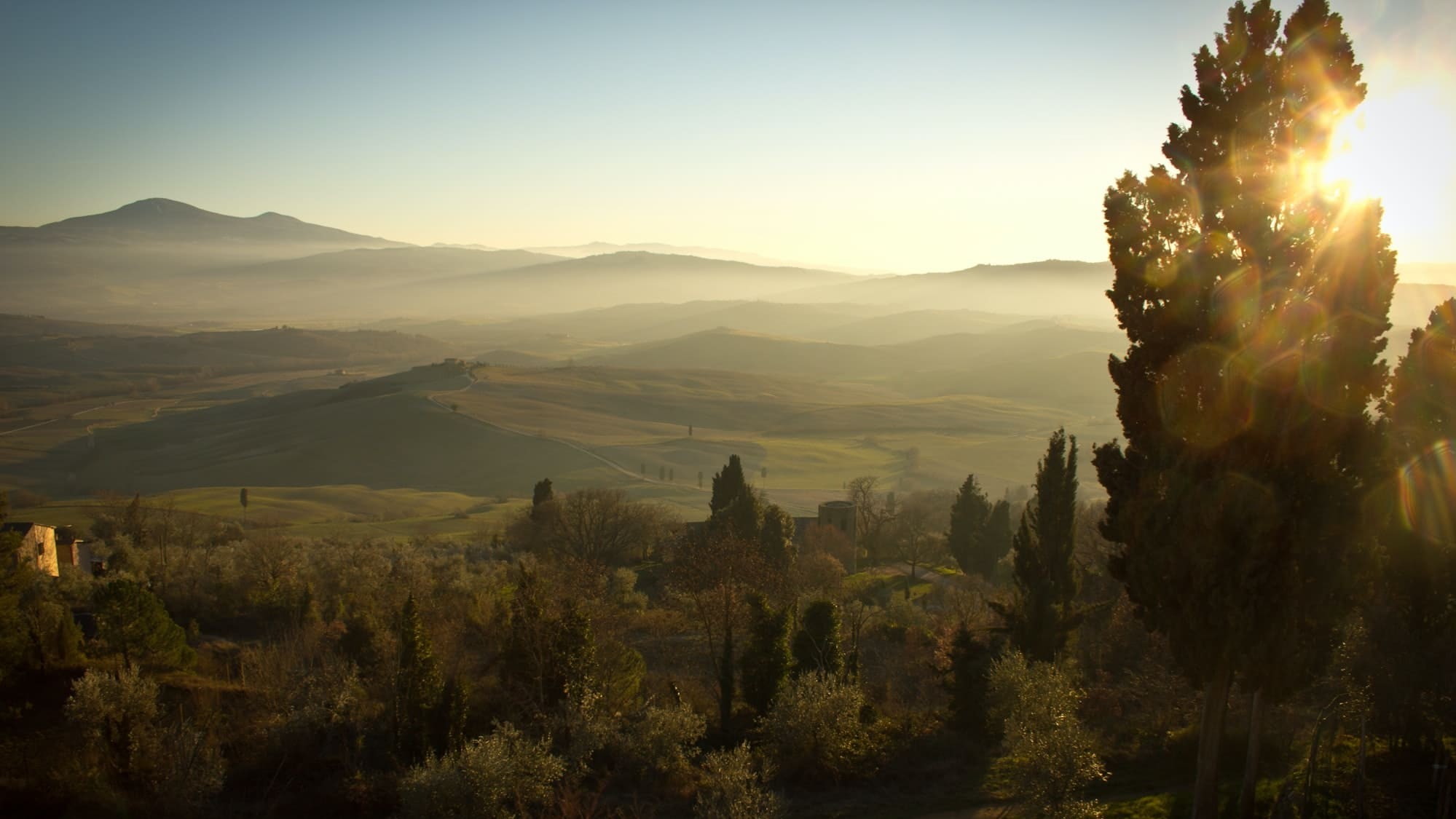
Near Tuscany, the mountains lie, great globes
Of difficulty that encourage dreams.
What are dreams if not arrows targeting
The you who's civil to your fantasies?
Near Tuscany, the cypress trees can thrive,
Defying our obsession with design
Of pretty or predictable nature.
Those woods are ambush angels in disguise.
The Tuscans say their cypress trees provide
The timber used by Cupid, god of love,
To make his arrows. Una freccia—
One arrow—could be cruel to fantasies,
Pricking to life invaluable lies called "love."
Unsettling storms, contagious heat we blame
On mischief that miscarried—or disarmed.
Since sex is a duet, we can forget
Love sometimes is a song for a single voice.
Love's much too young to entertain a conscience.
Bio
Native New Yorker LindaAnn LoSchiavo, a Pushcart Prize, Rhysling Award, Best of the Net, and Dwarf Stars nominee, is a member of SFPA, The British Fantasy Society, and The Dramatists Guild. Elgin Award winner "A Route Obscure and Lonely," "Concupiscent Consumption," "Women Who Were Warned," Firecracker
Award, Balcones Poetry Prize, Quill and Ink, Paterson Poetry Prize, and IPPY Award nominee. Messengers of the Macabre (co-written with David Davies), Apprenticed to the Night (Beacon Books, 2023), and Felones de Se: Poems about Suicide (Ukiyoto Publishing, 2023) are her latest poetry titles.
In 2023, her poetry placed as a finalist in Thirty West Publishing's "Fresh Start Contest" and in the 8th annual Stephen DiBiase contest.
Twitter: @Mae_Westside
LindaAnn Literary
Messengers of the Macabre
Author's note
Southern and Northern Italians made fun of dialetto toscano, the Italo-Dalmatian dialect of this region. The main feature that separates standard Italian (i.e., Romano) and Florentine is the phonetic characteristic called “Gorgia Toscana”—or the “Tuscan throat.”
For instance, Italians will pronounce “gelato” (ice cream) with a [dʒ] sound as in “judge” whereas Tuscans will pronounce this noun with a [ʒ] sound as in “vision.” Another example is the plosive stop on “p” that is familiar to English, French, and Spanish speakers. Most Italians will pronounce “ponte” (bridge) as “poːnte” whereas Tuscans will massage the p into a softer f sound [φ] using their lips, thus “ponte” sounds like “fonte” [φoːnte] in Tuscany. The most noticeable difference is the pronunciation of Italian’s hard “c” as a softer “h” sound in Florence.
Since their linguistic quirks were widely mocked, Tuscans retaliated by spreading their own public relations myth: Cupid exclusively used wood from their cypress trees for his arrows.
This was the amusing inspiration behind my poem about the god of love, a famous archer.