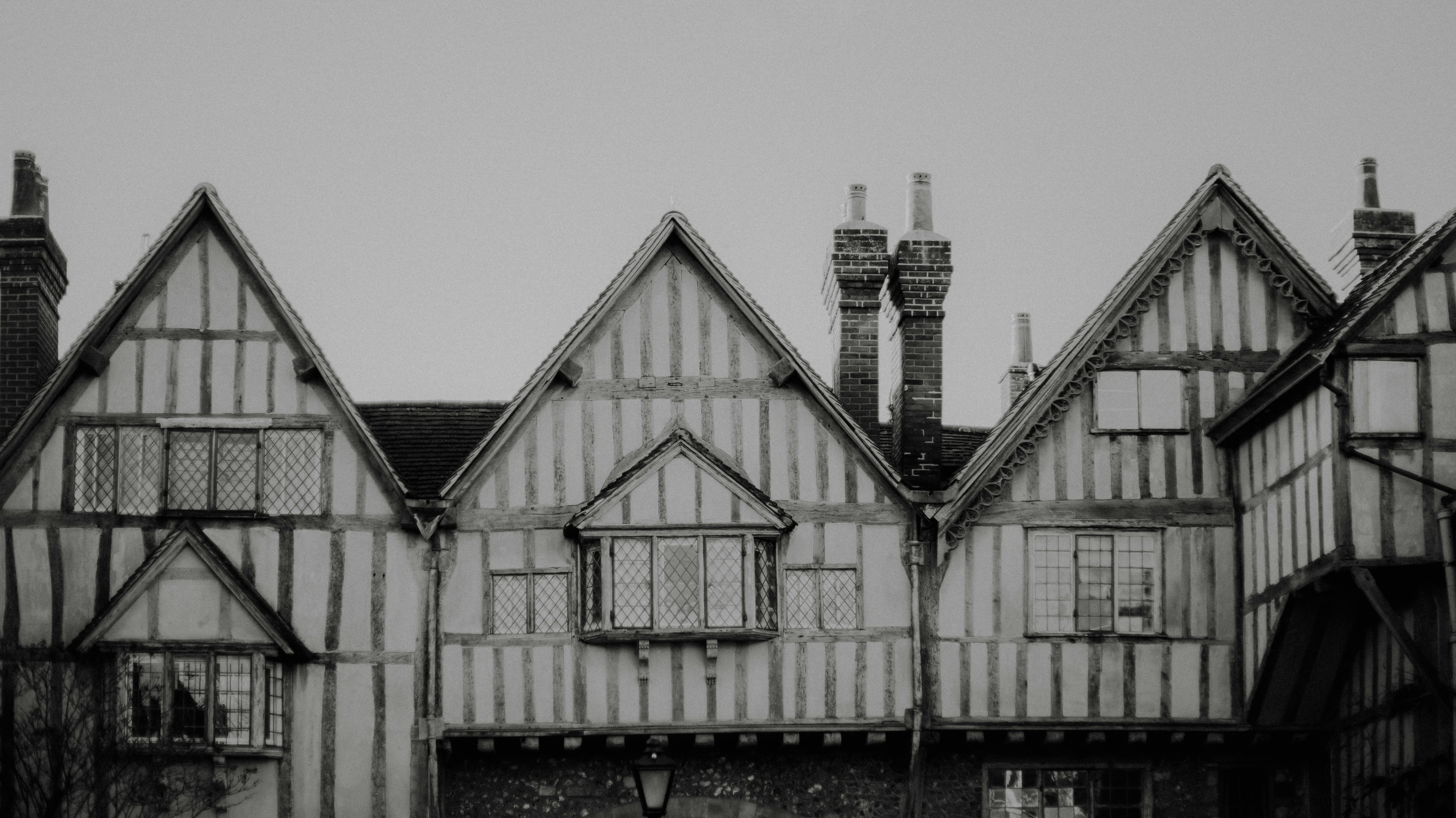
A Quiet Departure by Justin Taroli
They say the Piper led them away with music, but that part isn’t true. There was no song, no dancing procession through the gates. It happened in the night. Quietly, like all departures worth mourning. I woke to my mother’s arms emptying of warmth, her voice calling out names that didn’t include mine. My brother was gone. So were the rest—the ones who didn’t quite belong: the girl who wore her father’s boots, the boy who wouldn’t speak, the child with the shaking hands. We weren’t allowed to say their names after that. We weren’t even allowed to remember them properly. The town gave us a story instead.
They painted the Piper in red and black—devil’s colors. Said he came from nowhere, that no one saw his face twice. But I remember him. He stayed in our village for two weeks before the disappearance, sleeping in the loft above the cooper’s shop, eating quietly at the back of the tavern. He had a long, narrow frame and a voice that never rose above a murmur. The elders avoided him. The children didn’t. My brother followed him like a stray. They said he was enchanted, bewitched. They said it because it sounded better than the truth—that he was understood.
It was only later, when the paintings and broadsheets began to spread, that his costume changed. His bright coat grew darker with each retelling. They made him sinister so they wouldn’t have to answer for what happened. And they made the music loud because the silence of that night was unbearable. No one wants to believe their children left them willingly.
***
I remember the Piper before he had a name. Before the coat, before the music. He arrived at the end of spring, when the last of the snowmelt turned the fields to glass. No fanfare, no declaration. He was just there one morning—leaning against the well, speaking low to the baker’s boy, who laughed like he hadn’t in weeks. I watched from the window. His hair was long and pale, the color of bones that had never known earth. He wore no shoes.
The townspeople didn’t like him. They said he was a vagrant, or a drunk, or worse, a foreigner. But no one told him to leave. They rarely do, not with words. It was the way the innkeeper handed him bread without touching his hand. The way the church doors stayed shut when he passed. He didn't fight it. He kept to the edges—drank from the river, slept in the hollow behind the mill. Children found him anyway.
My brother was the first. At the time, I told myself it was curiosity. He’d always been drawn to strays—lame birds, stray dogs, men who walked alone. The Piper spoke to him like they shared a language I couldn’t hear. I saw them once behind the orchard, sitting cross-legged in the tall grass. The Piper was whittling a branch down to a clean, pale stick. My brother watched him work with a look I couldn’t place. Something close to recognition.
That night, my brother came home with dirt on his knees and sap on his sleeves. He didn’t speak during supper. Our father asked if he’d been near the river again. He said no, though we all knew it was a lie. He wouldn’t meet my eyes.
The Piper stayed two more days, then disappeared. And a week later, so did they.
***
It began like any other night. My father was drinking with the butcher, their talk thick with jokes that sounded like threats, the way grown men laugh when something needs killing. My mother peeled onions in the kitchen, humming under her breath, her eyes watering more than the onions warranted. My brother and I sat at the table. He was carving something into the underside with the tip of his dinner knife, his thumb pressed to the wood to muffle the scrape.
“What are you doing?” I asked, not unkindly.
“Marking the year,” he said, without looking up.
“It’s already carved there,” I said, pointing. 1349.
He smiled a little. “Not the year you think it is.”
I didn’t understand that then. I only remember thinking he sounded older than he should have.
Later, we climbed into bed—he in the cot by the window, me curled beside the hearth. We didn’t speak. The fire had gone low, and the room was thick with the scent of onions and soot. I must have fallen asleep quickly. It wasn’t until the wind woke me that I noticed the door ajar.
The hearth glowed faintly. My brother’s cot was empty.
I got up and crossed the room barefoot. No boots were missing. His coat still hung on the peg. I stood in the doorway and looked out toward the square, where the moonlight spilled like milk over the cobblestones. That’s when I saw them. Several shapes moving toward the edge of town. Pale, silent figures. Children. One by one, stepping barefoot through the dew-soaked grass. My brother among them.
I called out but not too loudly. I didn’t want to wake my parents. Just enough that he might turn. “Matthias,” I whispered.
He didn’t stop, but he did turn his head.
Even now I remember his face. Spellbound and clear. As if he’d made peace with something. He raised one hand—not to wave, but to pause me. Stay there. Go back inside. Then he turned and kept walking.
***
By morning, the town square was full of voices, loud and sure, like men repairing a fence. The baker said the children had wandered off during the night. The miller said they had been taken by wolves. The mayor, whose own son was among the vanished, said nothing for a long time. Then he stood on the steps of the church and cleared his throat.
“This is the work of sorcery,” he said. “We were warned. We allowed a stranger to walk among us. We let our children speak with him.”
A woman near me wept into her apron. Another shook her head. No one mentioned that the Piper had never once raised his voice. No one asked why some children had been taken and not others. They only counted their own and, if none were missing, considered it a kind of blessing.
At home, my mother boiled water and scrubbed the floors until her hands turned pink and raw. My father nailed shut the back door and lit a candle in the window, then told me not to look out. I asked when Matthias would be back. My mother didn’t answer. My father said, “Don’t be ungrateful.”
The following Sunday, Father Anselm delivered a sermon on temptation. He said the Piper had been sent to test our virtue, and those who followed him had already been lost. He never said their names. No one did.
We were told to forget. We were told it was mercy that we’d been spared. At school, the benches sat half-empty, but the teacher moved us closer together so it wouldn’t look so bare. When I tried to write Matthias’s name on my slate, she took it from my hands and said, “We don’t speak of the past, child.”
I stopped asking questions after that.
But I began to watch. The grown-ups. The faces they made when the wind came from the mountains. The way their voices dropped when a cart passed through town with an unfamiliar driver. The way they flinched when the flute seller came each spring, even though he played nothing but market songs.
The town was not mourning. It was burying.
***
The town grew quieter after they left, slowly, like a body realizing where it’s been wounded. School still met in the chapel’s west wing, but the benches remained half-empty. We no longer sat by age or ability—just proximity. If someone sat too far alone, the teacher would shift us around like spoons in a drawer, as if closeness could solve what was missing.
I remember the way silence shaped everything. If someone mentioned the word music, there’d be a pause in the room, just long enough to notice. If a boy walked too softly, if a girl looked too long at another girl’s hands, if a child wore their hair not quite right—there would be a whisper, a correction, a new seat at the table. No one said what was wrong exactly. But we all learned how to stay on the safe side of ordinary.
One morning, I passed a scrap of red cloth caught on the gatepost near the orchard—the same place I’d once seen my brother and the Piper sitting cross-legged in the grass. It was weather-faded and torn, but I remembered that color. The Piper’s coat had been stitched in a patchwork of old linens and velvet scraps—faded crimson, wine-dark brown, a slash of orange at the cuffs, vivid enough to trouble the eyes. I stared at the fabric until a cart rattled past and I dropped it, suddenly ashamed.
That night I returned to the orchard. Not looking for answers, exactly—just the shape of something familiar. The ground was damp and sunken, the grass long. I sat where I thought they might have sat, once. There was a rustling in the hedge, and when I brushed aside the leaves, I found the edge of a wooden board, loose in the wall of the old toolshed.
Inside the hollow: a narrow flute, smooth and dull with age. Just fingerworn wood darkened by time and weather. I turned it over in my hands and felt presence. A proof of having been.
I brought it to my lips and blew gently, as I’d seen boys do at festivals with reed pipes. Nothing. Just a warm, breathless exhale. I tried again, harder. Still nothing.
Later, in bed, I tucked the flute beneath my pillow. I didn’t tell anyone I’d found it. I didn’t play it again. But I began to understand something I hadn’t before—not about magic, but about choice. About the way people leave things behind not because they forget, but because they hope someone will find them.
***
He arrived in late spring, walking beside a cart with no horse. Just his own hands on the handles, a patched linen sack at his side. He was maybe thirty, with hair cut short like a soldier’s and a narrow silver ring through one ear. The children called him Brother Ox for the way he carried the weight without slowing. He spent three nights in the stable behind the tavern, trading repairs for bread. The men asked where he’d come from. He said, “East of the range.” Someone muttered that there was nothing east but forest and snow. The traveler smiled and said, “Not anymore.”
He spoke little, but when he did, it was with certainty. On the third evening, he sat beside me on the bench outside the chapel while I whittled the edge of a stick, pretending it might one day be something. He watched for a time, then said, “That’s pipewood. It won’t take the blade evenly.”
I nodded but kept at it. The silence between us settled like a shared coat.
“I knew someone,” he said eventually, “who carved like that. Wouldn’t speak to most folks. But his hands said what he meant.”
I looked at him, slow and careful. “Where?”
He didn’t answer right away. He reached into the sack at his feet and pulled out a strip of cloth—frayed blue linen, hand-stitched with red thread in the corners. I knew that thread. My mother used it on Matthias’s shirts, thinking it lucky.
“There’s a place,” the traveler said. “Few days east through the pass. Not marked on your maps. I only found it by accident.”
I didn’t ask its name. I only asked, “Is it real?”
He smiled again—gently this time, like someone remembering a dream he half-believed. “They dance there,” he said. “Not for show. Just because they can. There’s music, but no stage. No one asks your name. You don’t have to explain the way you walk or why your voice falls the way it does. No one asks who you were before.” He stood and adjusted the sack on his shoulder. “Don’t mention I said any of this.”
“I won’t,” I said. But it was already too late.
The mayor refused him lodging after that. Said his kind drew storms. The priest gave a sermon the next morning about vagrancy and moral confusion. The children were told to stay indoors. I watched from the orchard as the traveler left, his figure small against the green.
That night I pulled the flute from its hiding place. My fingers found the grooves again. And for the first time I thought not of Matthias coming home, but of following.
***
I woke before the bell. The house was cold, the fire long out, but I didn’t light it. I dressed in silence, slipped my shoes on without tying them. The sky was barely grey when I stepped outside, the grass wet with dawn. I ran toward the eastern road, heart pounding, the flute tucked into my coat like a promise.
I found him in the thinning woods past the chapel fields, his cart half-covered in morning mist. He was sitting on a fallen log, eating something from a cloth bundle—cheese, maybe, or bread gone soft at the edges. He looked up, surprised.
“They’ll be looking for you,” he said.
“I don’t care,” I said, though I wasn’t sure it was true.
I stood a few feet away, too shy to sit, too stubborn to leave.
“Is he there?” I asked. “Matthias. My brother.”
He wiped his hands on his coat and nodded once, with no drama.
“Yes,” he said. “Has been for years.”
My throat tightened. “Is he… is he all right?”
The traveler looked at me for a long moment, then said, “He is whole. That’s the word I’d use.”
He shifted on the log, patted the place beside him. I sat. He reached into his satchel and pulled out a small paper bundle, unfolded it to reveal a ring carved from bone—simple, clean. He turned it in his fingers.
“There are people there who go by new names. People who never spoke, who now teach songs. Girls who became boys. Boys who became something else. People who left nothing behind but what they couldn’t carry.”
He handed me the ring. “He made this.”
I held it in my palm. It was warm from his skin.
“Why did they leave?” I asked.
He didn’t answer right away. A bird called overhead, sharp and quick. “Because they had to,” he said. “Because the stories you were told about them were too small to hold who they were becoming.”
I opened my coat and showed him the flute. “Was this his too?”
He looked at it, eyes soft. “No. That one was the Piper’s.”
My breath caught.
He added, “He left it for your brother. And your brother left it for you.”
I didn’t know what to say. I pressed the ring into my palm until the ridges left marks.
The traveler stood, slung the satchel over his shoulder, and nodded toward the road. “They’re not lost. You understand that now?”
I nodded. My eyes stung but I didn’t cry.
He left without another word. I watched him walk until the trees thickened and he was gone.
I stayed in the woods a while, sitting on the log where he’d been, the flute across my knees, the ring clutched in my hand. That was the first time I let myself believe my brother had left because he was brave—not because he was taken.
***
It happened in summer, just as the river pulled low and the stones at the bottom began to show their faces. Her name was Elsa. Eight years old. Quick-footed, sharper than most. She lived with her uncle in the house near the tannery, and wore trousers beneath her skirts, always. Said it made it easier to climb trees.
The morning she vanished, there was no commotion. Just the quiet ripple of news. The baker’s daughter told the schoolmaster. The schoolmaster spoke to the priest. By noon, the church bell was rung, not in mourning but in warning.
This time, no one blamed wolves.
“She was troubled,” someone said at market.
“She never had a proper mother,” said another.
“She brought it on herself.”
I watched the adults repeat what they’d said before. Softer now. Tired. Even the priest’s sermon felt thinner—reused words, still polished but dulled at the edges. Like a knife that couldn’t quite cut anymore.
I saw Elsa’s shoes outside the chapel that week. Polished. Lined up neatly beside the others. No one moved them. No one spoke her name.
But I remembered a day in spring before she vanished, when I passed her in the orchard. She was tying scraps of ribbon to a branch—bright bits of cloth like prayer flags. I asked what she was doing.
“Practicing,” she said.
“For what?”
She grinned with a kind of certainty I’d never owned at her age. “For leaving.”
***
My mother was mending a tear in my coat when she mentioned him. Not by name, of course—he never had one, not officially. But I knew who she meant.
“He’s been seen again,” she said, pulling the needle through with a sharp flick. “Tall. Thin. That strange coat. The way he walks—like he doesn’t belong anywhere.”
I stood at the hearth, drying my hands. “Who saw him?”
She shrugged. “A traveler passing through from the north. Said he keeps to the ridges. Still plays that instrument of his.” She looked up at me then, eyes narrowing just slightly. “You’d stay away, if he came back, wouldn’t you?”
My father didn’t look up from the tin he was fixing. “Don’t be stupid,” he muttered. “That man’s a sickness. Anyone who follows him doesn’t come home.”
I said nothing. Let them believe I was still theirs. But I felt the shape of the flute against my ribs, the bone ring tight around my finger. The past was already behind me.
My mother passed the coat to me and patted my hand. “You’ve always been our good one,” she said. “Strong. Sensible. Not like your brother. He…wandered.”
I nodded. Folded the coat. Pressed my palm flat against it and felt the weight of the flute sewn into the lining, where she hadn’t thought to check.
That night, I packed the coat, the flute, some bread and the bone ring I kept tucked inside an old bread tin beneath the floorboards.
I left before dawn. The house was still. The sky just beginning to shift from black to blue. I walked east, past the chapel, past the orchard, past the marker stone where the old road becomes less road and more path. No one followed. No one called out.
At the ridge, I stopped and turned once, looked back at the village—the thatched roofs, the smoke, the silence. They’d say I vanished. That I was taken. That it happened in the night. Quietly. Like all departures worth mourning. Let them.