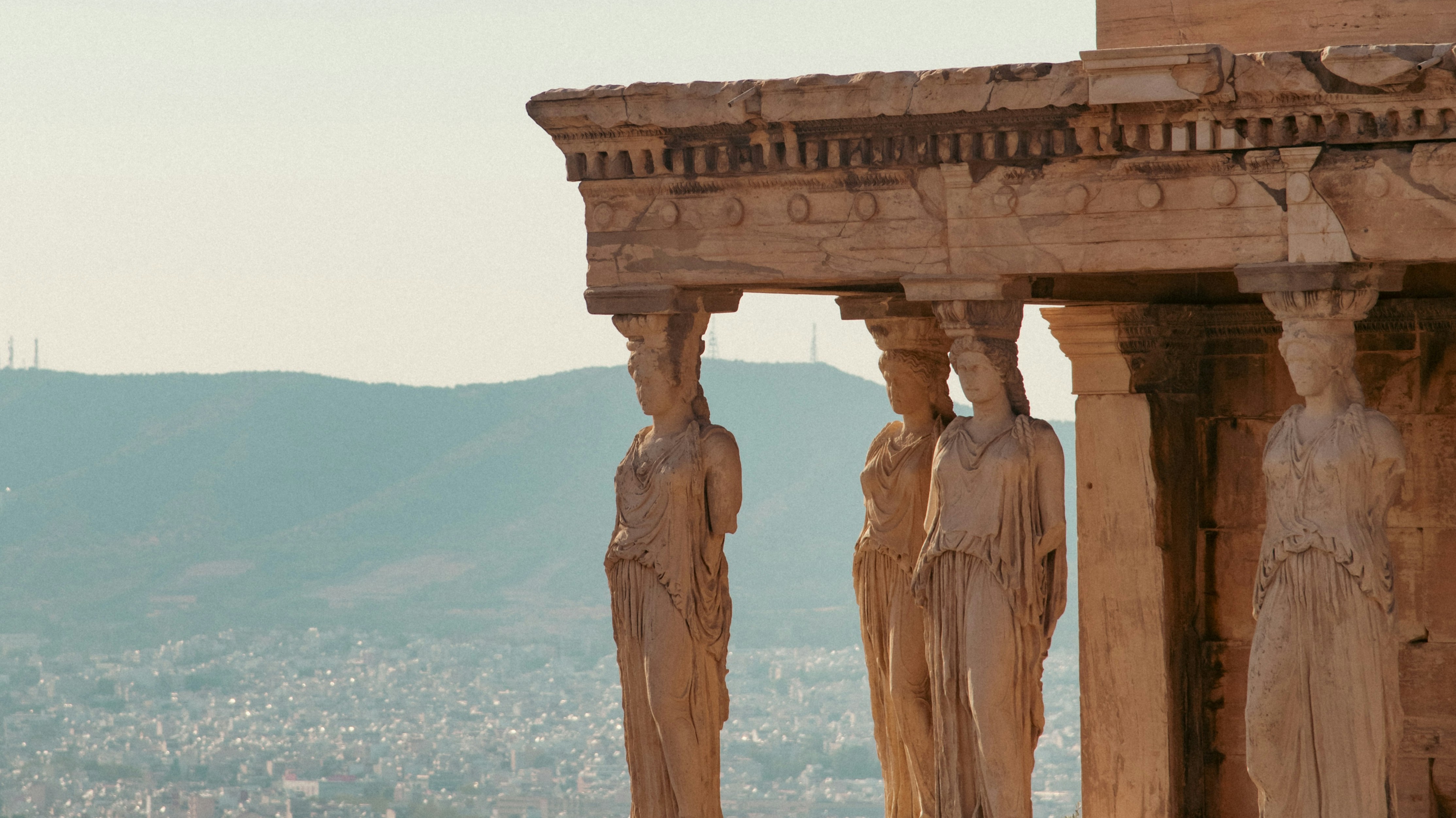
Athena in Athens by Scott Francis
Upon the Parthenon tonight
I perch, a Goddess owl
Mammoth. My eyes of onyx mirror
The scars of time. My scowl
Scoffs at what is left of my temple
Robbed of all my marvels
Rippling in liquid artistry,
The so-called Elgin marbles
Carted away like skeletons
Or mummies, proving death,
Like might, is right. Millenniums
And warfare’s spoils have left
Athens a dark, asthmatic blue,
Spewed by tail pipe emissions
Fuming like propaganda of
Demagogue politicians
Dynamiting my democracies,
My grand experiments
I granted humankind, the gift
My grace and wisdom sent.
We need a thinker great like Plato
Who’ll sing alive the forms
Of beauty, who’ll make the ideal
Manifest, one who’ll soar
Like Phidias, the sculptor I
Taught to make mere marble
Mirror Being and reflect
That rarest of all marvels,
Nakedness
Changed by art to reveal
The shimmering and the presence of
The ideal, what is real,
Plato’s remembrance, the recalling
What we have always known,
The self within, the purity,
Truly what we are, none
Other than what my Parthenon
Was, the divine unseen
Seen, grace and symmetry planned and
Built for my people’s needs.
With one last scowl
Glowering at my ripped
Off temple and the rubble tourists
Pay to behold, I lift
Away and spread my wings as huge
As skies. I seek to find
Ways to bring back
The glory and
The gift.