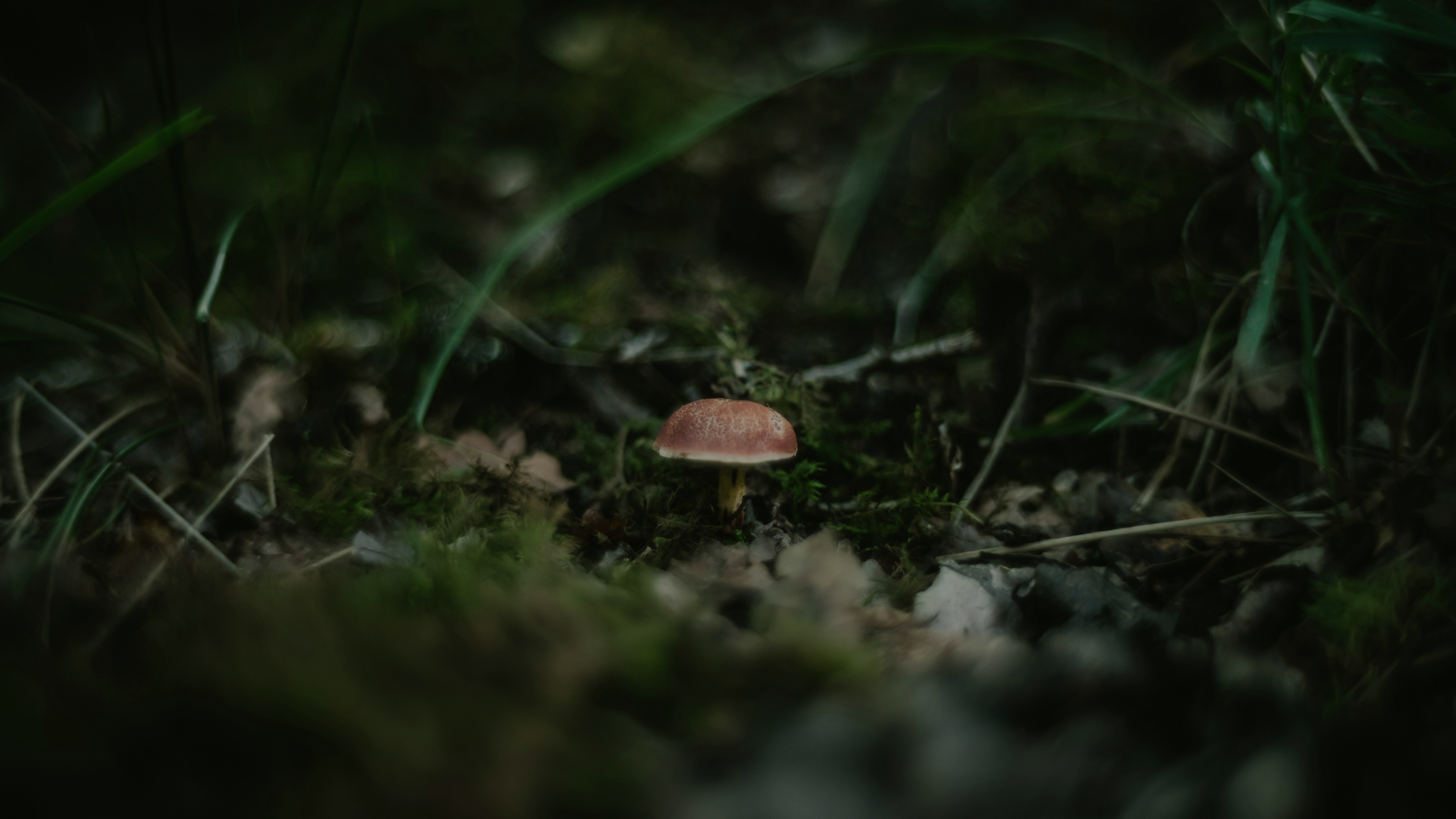
small mushroom growing on forest floor

Photo by Annie Spratt on Unsplash

Song of the Worm by Jonathan B. Aibel

"Seven days and nights I sat beside the body,
weeping for Enkidu beside the body,
and then I saw a worm fall out of his nose" —Gilgamesh, translated by David Ferry

Do not curse me. Horrified,

you start, but I do not care.

I follow my nature, my mouth,

clean the discarded, the lost, restore

all things that moved and grew

to the earth.


Do not curse me. The body was empty

no matter how dear he was, gone,

long departed to the dark house

before I did my work. What's left

is clay waiting to rejoin earth.


Do not curse me. Even gods'

images crumble, even the black

queen Ereshkigal will give way

to another god's underworld.

No matter how lucky, even cities

are scattered in the dirt.


Do not curse. To the dark mother,

all bodies are offerings, even mine,

even the two-thirds divine.

Gilgamesh, in my nature

I also have an office: priest

of our grandmother Earth.


Bio

Jonathan B. Aibel is a recovering software engineer who lives in Concord, MA, homelands of the Nipmuc. His poems have been published, or will soon appear, in Chautauqua, American Journal of Poetry, Lily Poetry Review, Ocean State Review, Pangyrus, and elsewhere.

Author's note

My mother read bedtime stories to me from D’aulaires Book of Greek Myths, sparking a love of ancient tales, and the insights into human nature that they provide. I picked up David Ferry’s “retelling” of Gilgamesh, after working with a literal translation in college. In the course of the epic, Gilgamesh loses his inseparable companion, Enkidu and is overcome with mourning, unable to accept that his friend, his brother, is dead. And in 2006 when my mother died, I returned to Ferry’s Gilgamesh. I found that the hero’s journey through loss helped me with my own.