Note to reader: this piece looks best when viewed on a larger screen. Some formatting may not display correctly on mobile.
Portrait series by Vincenzo Cohen
.JPG)
"King Italus (2021) oil on canvas, 60x40 cm"
The painting depicts ITALUS, mythical king of ancient Calabria. According to historians, he arrived in Calabria during the Iron Age and reigned over the Italic people. Aristotle calls him King of the Oenotrians, who would later take the name "Itali" from him. The latter would have been a democratic king for having established the common meals between people and transforming the ancient Oenotrians into a civilized and sedentary people. The painting expresses the deep knowledge of the original myth. It is inspired by one of the famous Riace Bronzes (bronze B representing a warrior king) bronze sculptures in the severe style (5th century BC) conserved at the Archaeological Museum of Reggio Calabria. Ancient reference work: Bronze B (5th century BC C) National Archaeological Museum of Reggio Calabria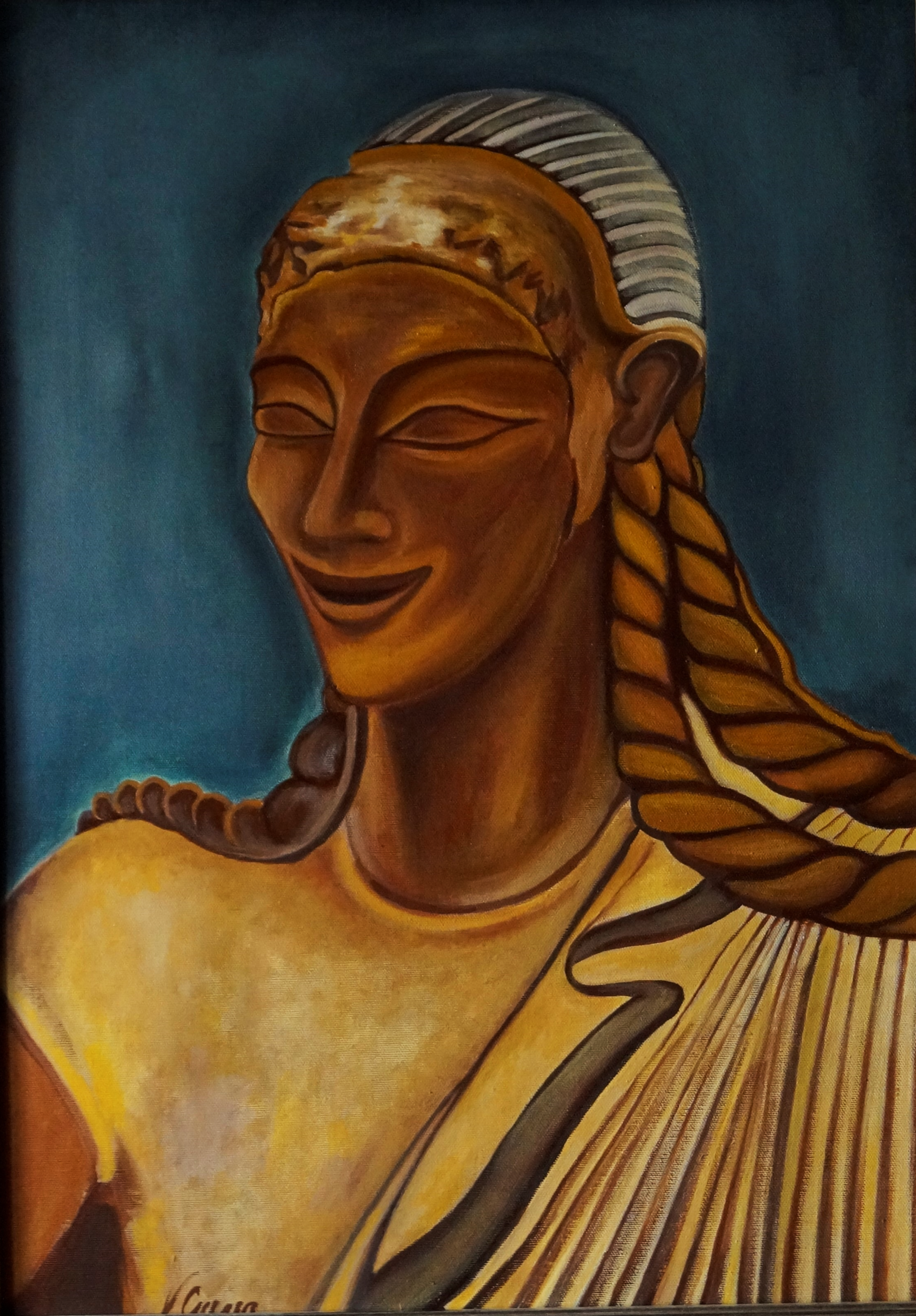
"Tyrrhenus (2017) oil on canvas, 50x70 cm"
The painting is inspired by the famous sculpture of the Apollo of Veio, a terracotta statue from Etruscan archaic period attributed to the sculptor Vulca and coming from the sanctuary of Portonaccio in Veio. The sculptural group represented the struggle between Apollo and Hercules for the capture of the cerinite deer with golden horns, sacred to Artemis. Tyrrhenus represents the young leader coming from Lydia who, according to the historical tradition narrated by Herodotus, led the Etruscans in Italic land founding the Tyrrhenian civilization and giving name to the Tyrrhenian sea. The almond eyes and the "archaic smile" refer to the archaic style (VI sec. B.C.); age of prosperity, in which man lived in symbiosis with nature. In its static hieraticity it combines the apollonian character of the Cretan daedalic statuary, the expressive force of the Greek Kοῦρος (a young follower of the Apollo 's cult) with the elegance of the polychrome Etruscan terracotta coroplastic art. The figure of the young man wears a regal tiara, a symbol of power and has braided hair according to the fashion of the time.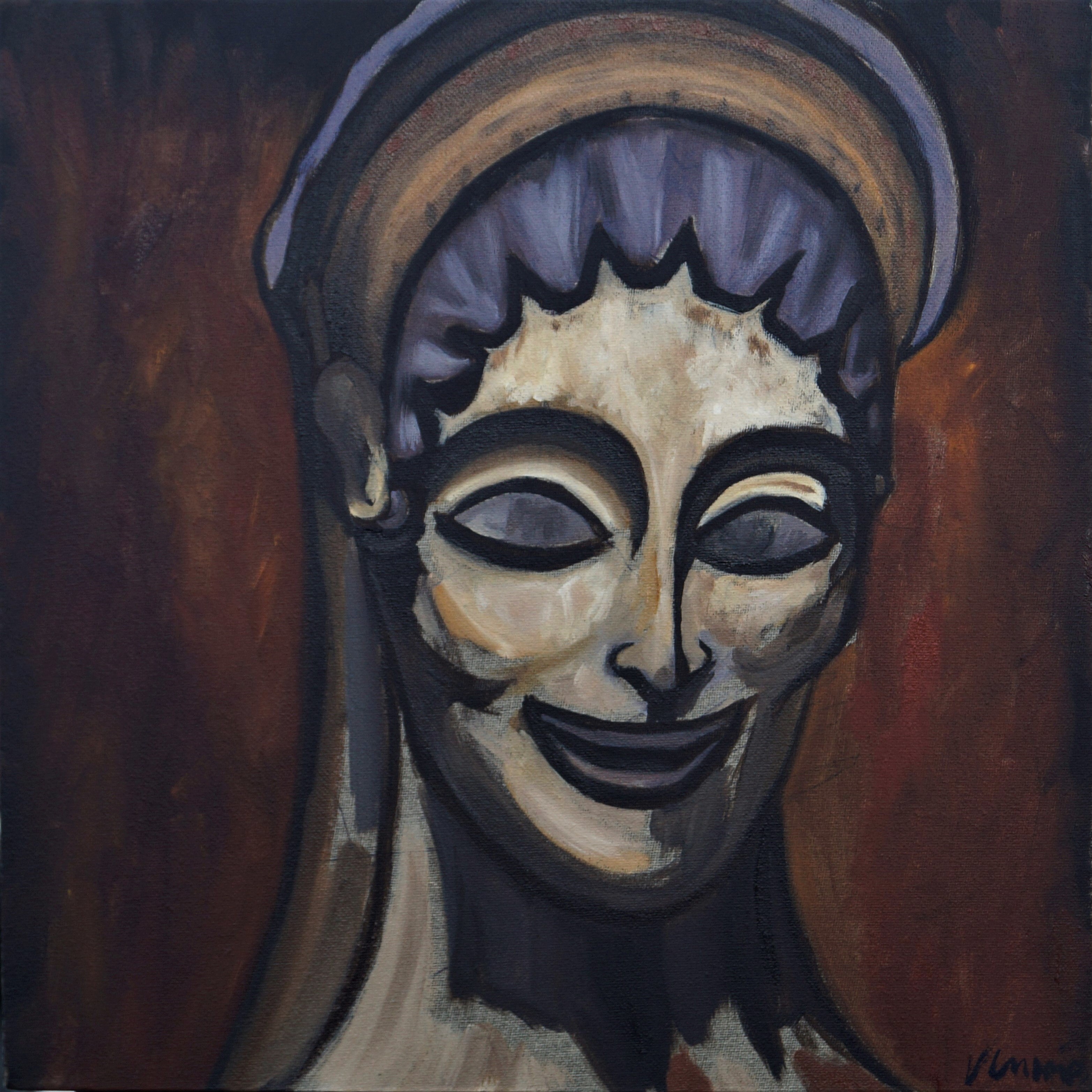
"Latona (2021) oil on canvas, 40x40 cm"
The artwork is linked to the painting depicting Tyrrhenus and is inspired by the same sculptural group of the Apollo of Veio decorating the columen of the temple consecrated to Menerva, in the archaeological area of Portonaccio in Veio. The goddess Latona, mother of Apollo, was represented there in the act of throwing an arrow against the snake Python and testified the high level of stylistic refinement reached by the school of the sculptor Vulca, to which the decoration of the temple of Jupiter Optimus Maximus on the Capitoline hill in Rome is attributed. Ancient reference works: sculptural group with Apollo and his mother Latona from the temple of Portonaccio in Veio, Etruscan Museum of Villa Giulia, Rome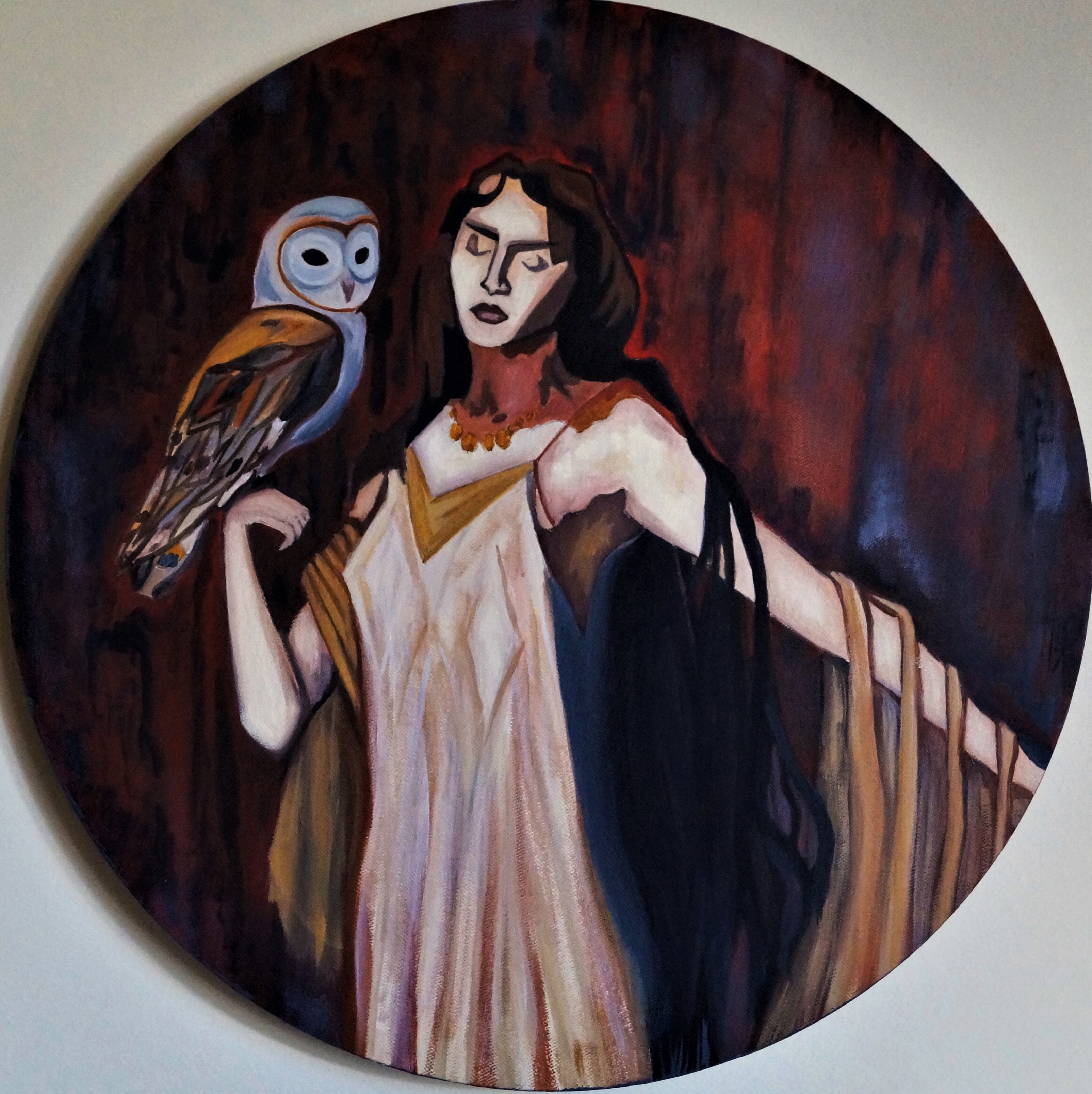
"The Sorceress Circe (2020), oil on canvas, 50x50 cm"
The painting, made in oil on a circular format depicts the famous sorceress Circe. The figure represented in the act of holding a barn owl (an allusion to the enigmatic and seductive nature of the myth) stands out against the darkness in the glow of the moonlight.