A Snare of Mountain Ash by Natalee Licciardoni
CW: death, murder, grief, supernatural horror
I was no novice to these woods. Rose and I had walked them for years, long before the town decided to turn against her. When I proposed to her near Bull Ridge Mountain, she had the perfect wedding date in mind. She loved the idea of Samhain, October 31st. Rose said the woods woke up that day and that the mountain ash remembered the important things.
Now, with her gone, I practically lived beneath the forest’s needles on every day off the clock.
But today, my steady pace weakened when I stumbled upon something I had never seen before. Something that had no business existing in this deep, untamed pocket of the wilderness. Rose used to say that if you listened carefully enough, the woods warned you before they changed. Standing there, I finally understood what she meant.
I was now staring at an old logging route, cutting a long, unnatural path through the middle of the forest. It was an impossible sight: a man-made intrusion dug into the dirt four miles away from any paved road, any distant house, or any lingering trace of civilization.
It was raining hard that day; the earth threatening to dissolve into a bog before my very eyes. I blinked several times to confirm what my own sight was struggling to process.
I approached the old logging road and crouched low. Deep, worn tracks were gouging the mud, but these weren't ruts I’d simply failed to notice before. They were emerging in real time as I watched. Then, a violent POP shattered the air. A massive tree snapped, slamming across the road just ten feet in front of me, only to disintegrate instantly into a fine, swirling mist of wood dust.
I stood, my gaze tracking deeper down that ridiculous path. It curved sharply to the right after twenty-five feet, a dead end in these woods, given that the steep mountainside ascended to block any path.
I spun around, searching the woods behind me for any sign of the same road. Nothing. No road, no trail, no unfamiliar landmarks, just the same dense, silent forest I had always considered a friend.
A tremor went through the soles of my boots. I staggered back as the mud puckered and bubbled, each track filling itself in then draining. Pine needles lifted off the ground and spun in the air. I narrowed my eyes and listened.
Before I could decide whether to retreat or press forward, the rain abruptly stopped, and in the sudden silence, the road disappeared. It didn’t fade gradually. The pathway vanished all at once, tire tracks smoothing out, mud rising, the shattered tree dissolving into nothing. In less than a minute, the forest floor was pristine, unbroken, untouched, as if the path had never existed at all.
Rain couldn’t shift timber or build roads; water was meant to erode, not construct. But this wasn’t weather, it was a transmutation. I had the strange feeling that this storm was acting as an architect, drawing an active purgatory out of the mud to settle a debt.
But these were my woods. They were meant to be explored, and I refused to be intimidated by a trick of the light or a lapse in my sanity. Life had been hard; the recent months even harder. I needed to allow myself a break.
I walked along the stretch where the road had been. At the twenty-five-foot mark, I turned sharply to the right and marched until I was nose-to-rock with the sheer wall of Bull Ridge Mountain. I pressed both palms against the cold stone, half-expecting some hidden latch or seam to give way under my touch. Nothing happened. The mountain stood as solid as ever. I shook my head and let out a dry, forced laugh, a gnawing worry that I was finally losing my grip on reality.
It was time to go home. I had come out here to remember Rose, but the woods were offering no peace today.
I turned back, pressing my lips into a thin, tight line. The moment I did, the heavens opened again. Rain came crashing down the rock face like a waterfall, blinding and torrential. Before I could take a step, the solid ground beneath me dissolved. I sank instantly, my legs plunging waist-deep into a sudden, choking bog. Then, I heard the creak of metal. Through the downpour, the road reappeared, and with it, a massive logging truck, half-sunken and struggling to claw its way out of the mire.
Torn between the panic of my sinking body and the sickening fear that someone lay dead inside that truck, I felt pulled in two painful directions. After losing my wife at such a young age, I had little left to live for, yet some stubborn, remaining fight lingered in me. Maybe that was just the instinct of the human mind. The part that refuses to die even when everything else has.
I begged the sky to stop its weeping for one damn second, but a terrifying thought froze me: if the rain stopped, would it anchor me to the earth like a tree? Would whatever lay beneath the mire claim me forever if the storm died? Half above, half below? Perhaps the rain shouldn’t stop, I thought.
I drove my legs against the heavy, suctioning muck that threatened to swallow me whole with every movement. I crawled forward, painfully slow, creeping inch by inch toward the truck. If I could just reach the chassis and haul myself up, I might find the leverage to jump to safety.
But every pull only drove me deeper. Mud sealed around my ribs and squeezed tight, and I thought it might never let me go. When I clawed at the ground, my fingers came away with nothing but black water and strands of long hair. They weren’t tangled in the mud at all, they were coiled around my wedding ring, wound tight in a beautiful braid. I lifted my hand, peeling the hair away, and the carved word on the band caught the light. Tethered. Rose’s only request for both our rings.
Then, something stopped me from my struggle: that truck. It looked familiar. My mind had buried the memory deep, interred it within the darkest folds of my brain, but the silhouette and the color, that cracked, rusted red sent a shiver across my body. Then, overhead, lightning flashed. It struck the large vehicle like a jackhammer, and for one blinding moment, I saw him.
The driver was bouncing in his seat, gripped by a hysterical energy. His hands strangled the steering wheel, knuckles bleached bone white. An iron ring glinted on his finger, etched with a braided pattern so similar to Rose’s weavings, it made my stomach hurt.
“I got her! I finally got her!”
The man’s laughter was a serrated sound. The hallmark of a shattered mind looking for revenge.
My breath stopped. It was him. The man who had run my wife down on those lonely back roads six months ago while she was gathering rocks and cutting down mountain ash.
I dared to look closer, and the truth nearly brought me to my knees. Dried blood crusted the truck’s deer guard. Tucked into the metal of the grille, unmistakable and haunting, were strands of her long, blond hair.
I knew my wife hadn’t been perfect, but she had been perfect for me. The residents of Blankenship had convinced themselves she was a witch, a suspicion that forced us into the woods at the edge of civilization. I still remembered the absurdity of the gossip, the horrendous lies spread simply because she didn’t fit their ideology.
The truck lurched with a groan, its rear wheels spinning hard enough to fling mud against my face before it settled back down with a suctioning sound. A loose chain snapped across the flatbed, whipping the air inches above my head. I ducked, almost forcing my face under the mire. It grazed my hair before disappearing beneath the bog.
For a moment, I felt like ripping that door open and drowning the bastard in the black water. I wanted to hold him under until his final breath was nothing but mud and muck, plugging up his airways. Maybe they’d give me the electric chair, and maybe that would be freedom. But I couldn't move. The man was a phantom, and just as the thought of murder took hold, the rain stopped, tearing the vision away and leaving me standing alone in the silence.
Rose had been a woman who found happiness in rocks, who crafted small figurines of cats, toads, and hares to tuck away throughout our garden. I had called it endearing. The town, in their narrow-mindedness, had seen them as her companions.
I knew that was precisely why they had hunted her down and murdered her. The authorities had never caught the guy, despite my description of the logging truck, not that anyone in town had really tried to look, either. I should have left Blankenship the moment the dirt hit her coffin, but it was never that simple.
To my sudden, hopeful surprise, I realized I wasn't sinking. I wasn’t trapped in a mire, and the bog didn’t claim my legs. Kneeling, I felt my shins pressed into a dry carpet of pine needles and packed earth. I gripped the ground, driving my fingers into the dirt until my knuckles stretched tightly against my skin, my mind spinning.
In a flash of blind rage, I scooped up a handful of soil and pebbles and hurled them at the nearest tree. The rocks didn't embed in the bark; they ricocheted off the trunk with a sharp, metallic clink.
I squinted, searching the ground where I’d been kneeling, and there it was, flashing in the dim light. A bent ring laying in the dirt, its metal warped as though crushed under immense force.
I scanned the earth for a mound, a sign of disturbance, but I didn’t have to look far. At the base of an old, gnarled Tamarack, the dirt was fresh, stripped of needles and stones, smoothed over with a hauntingly tender touch. Resting atop it was a simple structure of sticks, a tangled web of twigs.
I recognized the ancient weave; Rose had fashioned them for our garden from old mountain ash and willow, saying they came from the trees that stood closest to the veil. She called them 'soul-snares,' a practice as old as the landscape itself. They were designed to hold a guilty spirit in place until justice caught up with the flesh, anchoring it to the earth in purgatory. I would constantly laugh it off. She was cute and whimsical, and I loved that about her.
My hands shook as I cleared the crusted soil away. I only had to dig six inches before my fingers brushed against skin. An arm. The limb felt awkwardly fresh, still warm. For a second, panic took hold of me.
As the rain began to hammer down again, the world shifted into that unbearable, watery distortion. The logging road snapped back into existence, the bog turned sticky and black, and suddenly, I wasn't just sitting in the dirt; I was holding the killer in my arms, fixed in the mire. I realized then that the rain wasn't simply weather, and the bog wasn't just geography. Something was wrong with this place.
Then the body in my arms jerked once, and his eyes flung open wide. His fingers clawed at my face, then passed through me like smoke as he dissolved.
Beneath me, the bog opened like a throat, swallowing him into the soil. The earth wasn't just hiding his body; it was consuming him, sealing him into the bedrock where he would remain.
Then she appeared. I could smell her perfume. That scent of fresh apples and cinnamon.
Her long blond hair cascaded over her shoulders as she stood on top of the muck, untouched by the corrosion. She wore the same smile I had mourned for months.
Standing at the center of the altered earth, she offered a slow, beckoning wave, as though she was a keeper of the threshold and was urging me across the line between the living world and her new domain.
I smiled, taking a breath of the rain-soaked air. Then a terrible thought struck me. Maybe the town hadn’t been wrong. Perhaps she had been a witch after all.
Bio
Natalee Licciardoni writes atmospheric speculative horror from rural Montana for readers who love dark work that incorporates how we change after loss. Holding a graduate degree in biology, she weaves ecological accuracy into her work. Her stories appear or are forthcoming in Creepy Podcast, Witch House, Literary Garage, Owl Hollow Press and other venues. When she isn't writing stories about grief and liminal spaces, she manages a personal wildlife habitat and explores the wilderness of the North Fork.
Author's note
I wrote this story to explore how love reshapes us and how grief transforms the mind. In loss, we often learn that acceptance isn’t surrender, but rather a final act of devotion.
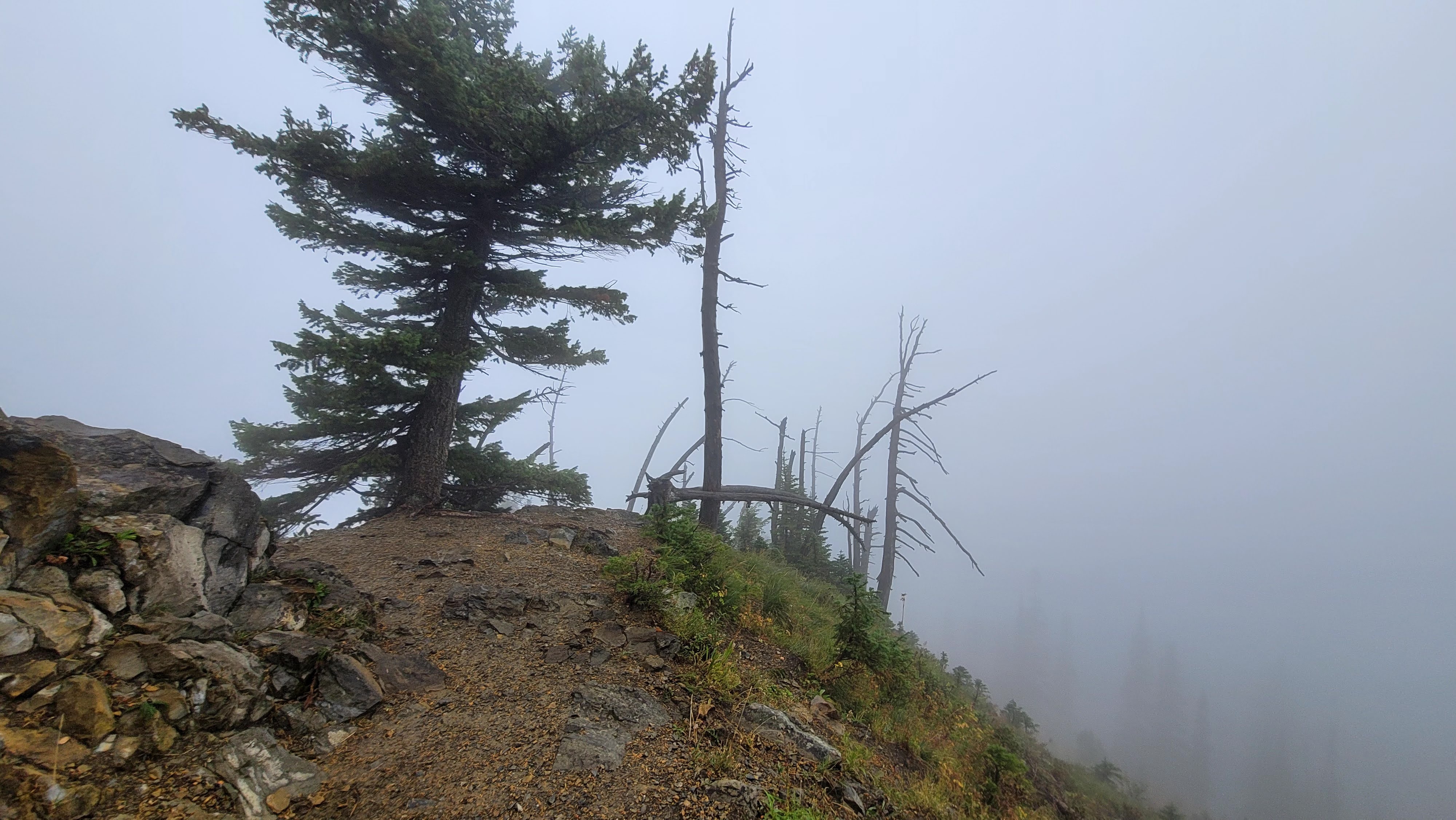
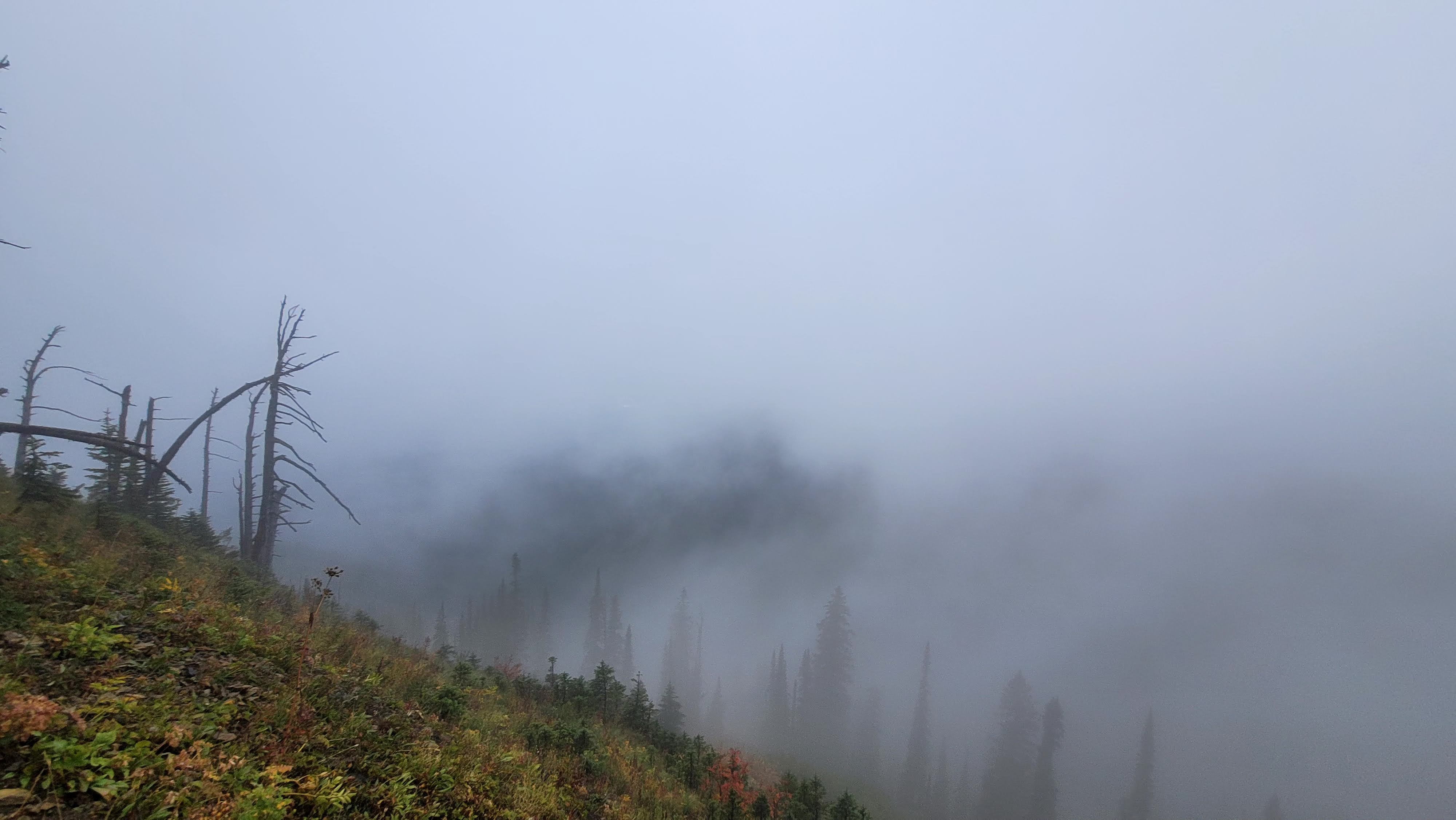
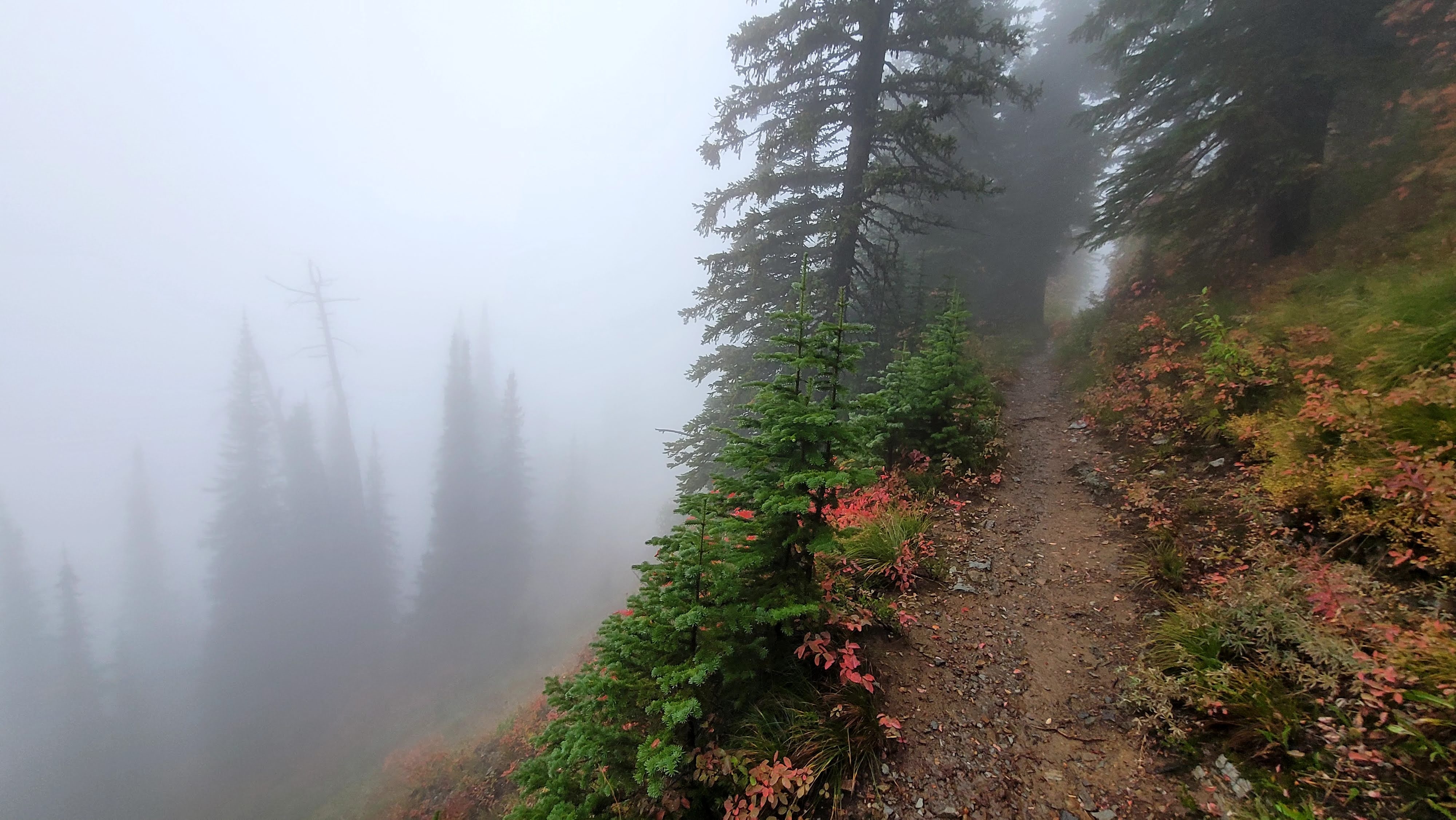
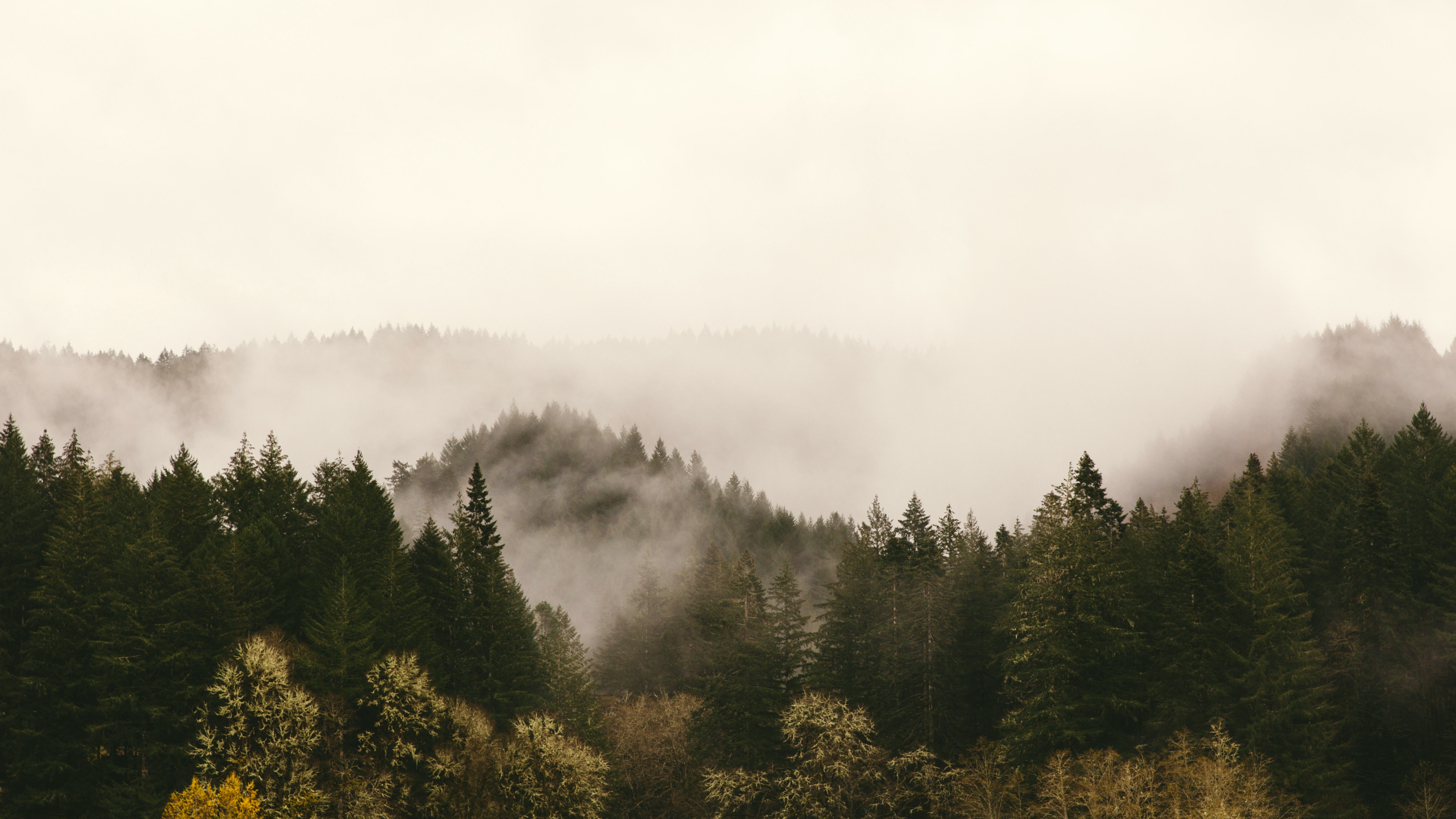
Included below are some photos of fog taken by the author during her hikes: