The Geography of Indigo by Ginny Brown
Before the copperhead strikes,
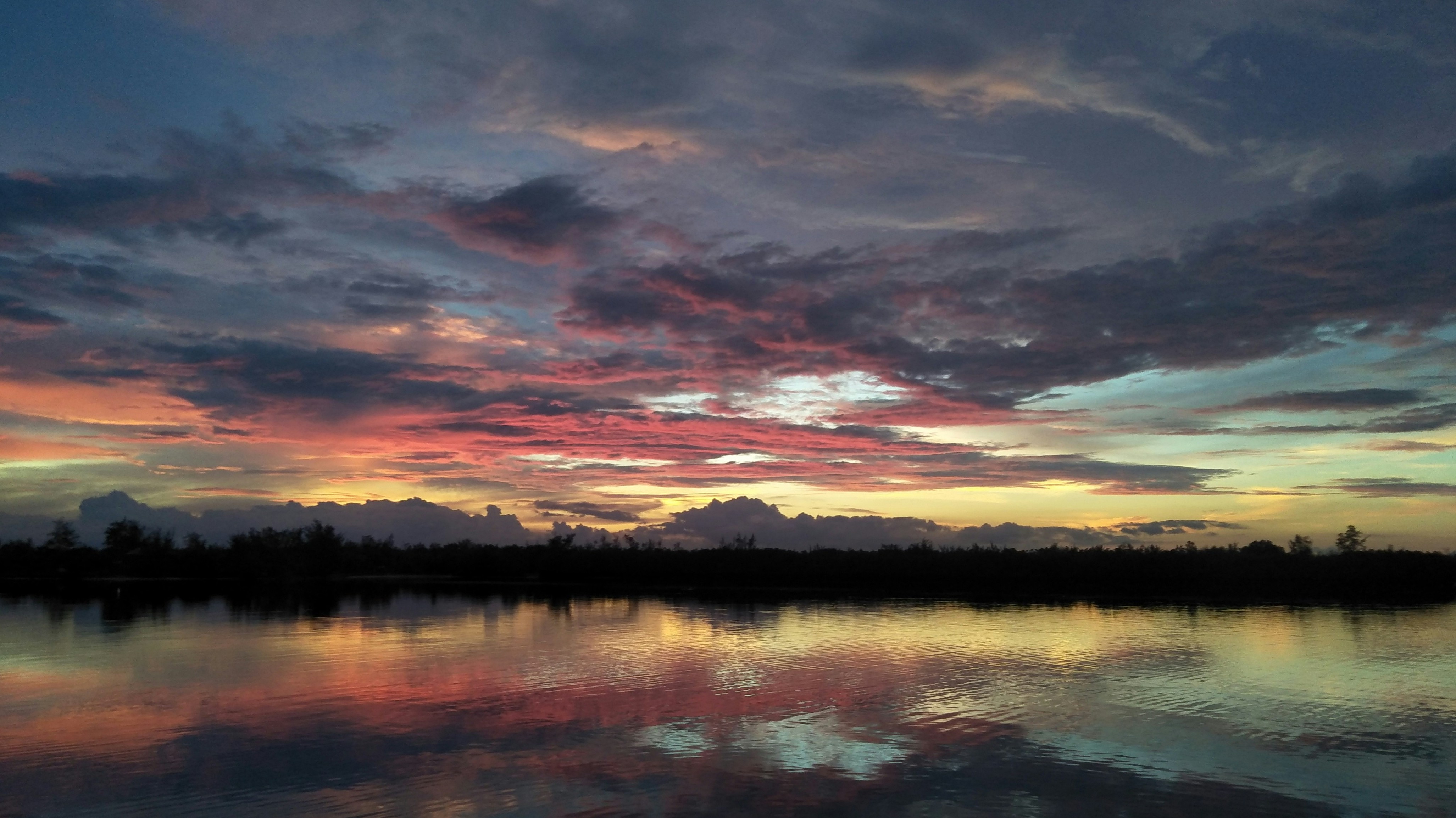
the tide turns the creek into a dark mirror,
window sills are painted the color of sky
so the spirits forget where the earth ends
and heaven begins.
Don’t look at the eyes in the marsh,
my grandmamma told me once,
as she scrubbed the porch with lime and crushed shells.
The Plate Eye don’t wear a single face.
It comes as a dog with lanterns for eyes,
it comes as a two-headed calf,
or something you lost long ago
then spent your whole life looking for
where it went.
In the rice fields, the water remembers everything.
It remembers the iron ring.
of the sweet grass baskets woven tight
so it could hold river water
without dropping a single bead.
When the night grows heavy with sulfur and damp,
the spirit stands at the edge of the yard,
floating over the pine needles
waiting for the unaware.
It cannot cross the indigo line.
It cannot step over a threshold
spread with salt.
It speaks with the voice of the wind
through the moss dressed as a beard.
It begs to be let in, through the voice of a child.
I stay behind the haint-blue glass.
With a handful of red clay.
I do not answer.
Some doors remain shut
not out of fear,
but because the living and the dead
each need their own side of the river to sing.