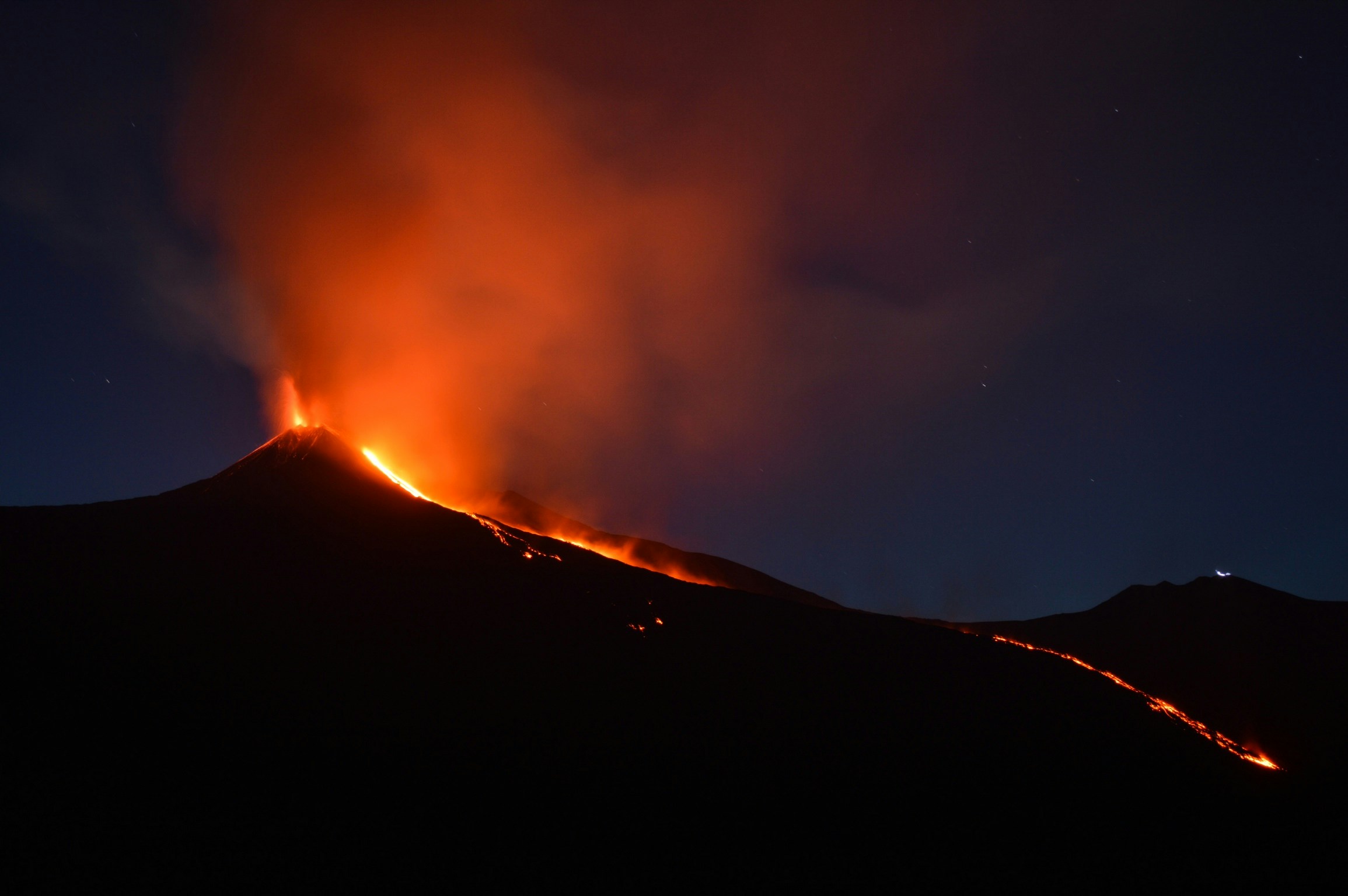
Photo by Shawn Appel on Unsplash
Forged by Mark Watkins
I was forged, as surely as if hammered on an anvil. We think ourselves free. An illusion, I assure you. My father Gorlois, noble enough, was killed by my father-in-law, the rutting bastard Uther Pendragon. My sister, the bitch, betrayed me at every opportunity. My mother Igraine, the monster, thrashed me at the slightest provocation. Who I was to be, well, I had little say in that.
Not long after my first bleed, I met Arthur, my half-brother, at a family feast. Arthur, the man who would be king. I made the mistake of looking at him a little too intently. My mother’s slap was not long in coming.
Morgana, he’s your brother.
I was just…
Arthur looked at me with pity and a certain hunger in his dazzling eyes. I didn’t want his pity. I wanted to caress those cheekbones. My hand moved without my permission, began to reach for his face.
Another slap.
Damn you. Stop.
I wanted to stretch out near his lithe flank, stroke his rippled belly, grasp that strong shoulder, searing flesh to searing flesh. But I could not. Mother hustled me away. But she could not stop me forever. And I have had my revenge. My sister rules the Isle of Orkney, but she can never leave. My blood magic keeps her there. Mother had the nerve to call me a harlot, she who would sleep with anyone who could help her—Uther Pendragon, Merlin, others. We always fear what we ourselves are guilty of, no? You didn’t believe that story of Uther putting on Gorlois’s face so he could bed her, did you? Please. Magic was too good for her. Her, I poisoned.
Some years later, I made Arthur my lover. He wasn’t hard to seduce; in the end, most men are simple, even if they are your brother. Half-brother. Let’s be accurate here. So it was only half incest, and to me, that is no sin at all. The Roman emperors did thus; the Egyptian pharaohs the same. I am no less deserving, no less royal, no less immortal. The sin is denying who you are, what you want, what you are willing to do to get it.
I knew the man was coming. I could feel his tread on the slopes of Etna. His breathing was labored, I could sense it. But it was not a fat man’s wheezing or the excited panting of a nervous boy. I have heard those coming from time to time. This was the deep and rhythmic breathing of a champion. Something woke inside me, something long quiescent.
He is here for the sword.
I sit on my throne, curious, a glass of wine in my hand, the blood-dark Sicilian Nero d'Avola, with its earthy love-bite of tannin. The villagers leave it for me. They know the boundaries of my kingdom and do not cross them.
My chamber is nestled beneath Etna, tunneled from lava, but glittering cold, smooth, crystalline. Pools and fountains lie scattered, the hypnotic sounds of water lulling the unwary to sleep. My magic can fashion comfort from rock, but I cannot hide the faint stench of sulfur, even after all these years. I look at the row of skulls against the wall, next to a heatless flickering torch, and raise my glass ironically.
Champions all, I cackle.
My voice alarms me. I sound like an old crone. I am an old crone. But that is easily remedied. I can be young and beautiful when the need arises. Spells surround me like air, so many to choose from. I have forgotten more spells than Etna has rocks, but any of the ones I recall will do.
You wonder what I look like, as if this question had an answer. What does the ocean look like? Gentle rolling waves landing on soft beaches? Spirited and vivacious, whitecaps flying? Or a dark and terrifying maelstrom? Which is the true ocean? So it is with me. If you want to know me—and I am worth knowing—the swell of my breasts and the swing of my hips is not the way. Years and looks are not our essence, young or old.
I know my reputation. Morgana le Fay, enchantress, seductress, faithless schemer. The mortal enemy of Camelot. Lies, mostly. There is no fiercer friend than I, no more loyal a lover. That is my essence. Arthur knew all that, once. Bastard.
The breathing comes closer. My hearing is not that of a human; no surprise will come to me here. But the sound is still faint. It will become clear soon enough. I hear the black sharp rocks clattering on the scree field as he continues his ascent. Will he be clever, I wonder? Able to see through my artifices?
It has been so long. To be encircled by the strong arms of a champion would be a delightful surrender. It’s been decades since someone was here. I don’t kill them all—just the ones who try to take the sword. The last cyclops of Sicily came here, and Ogier the Dane, Charlemagne’s man—their skulls adorn my chamber. Asad Ibn al-Furat, the Muslim conqueror of Sicily—they say he died by the plague, but here he sits—his skull at least. But those who find me to talk, those who are charming, who make me laugh—those leave under a spell that clouds their memory. Saint Thomas à Becket, for example, or Lord Nelson: both found me during their time in Sicily. They came, they saw, they forgot. The head of the Cosa Nostra came. He left, memories intact—we made each other an offer we could not refuse, so to speak.
In 1189, Richard the Lionheart came to Sicily. To Messina, to be precise, up the coast from here, lofty Taormina lying between us, the ghosts of Greeks singing in the high theater at night. He was on his way to the Holy Land on Crusade. I watched, disguised as a serving girl, as Richard gifted Excalibur to the monkey king of Sicily, Tancred.
I knew the blade. The sword of Arthur, my gift to my lover, the most famous sword in history. I had it forged here, centuries ago, under Etna, in the fires of Hephaestus below this chamber. The dwarves are still here, I can decant them if I need them. The sword is pattern welded; the rods of red-hot steel are twisted together, writhing in ecstasy, until they are hammered flat, not unlike Arthur and me. The rods, squirming snakes, are unmistakable once forged. ‘Dragon-skins,’ they call them.
I doubted Richard believed in the sword. Cynicism and a hunger for power and fame radiated off the man. He also was forged, a prisoner of his history. Yet it was clear he did not understand the power of what he held, that it was the horse he should ride to win his desires. When the Lionheart gave the sword to Tancred, my laughter shook the building. They had no idea, of course, as they looked up in fear at the quaking columns.
Tancred was oblivious. Once Richard was gone it wasn’t hard to steal the sword, bring it home. Now the dragon-skins sleep over my mantel, waiting, saved for Arthur’s return. To sheathe it in his heart, quench my rage, burn this palace to the ground in the fires of Etna, both of us inside.
My newest champion has made it halfway up Etna. I can feel his throbbing heartbeat in my chest. My pulse joins with his. I wonder who he is, this new hero, heaving chest laboring over thin air. Will he be funny? Handsome? Or tedious and grasping? I hope for entertainment, the years have been long and lonely. This champion whose heart now beats together with mine, of which temper is he?
Everyone thinks Avalon is in England. Fools. Geoffrey of Monmouth, that desiccated old priest, and Gerald of Wales, that buffoon, all of them so easy to deceive. A pretty face and a plausible tale are all it takes. Men are simple. I don’t want to be found. At least not by idiots. I have little room on my wall of skulls. Space is saved for the deserving.
I have hidden myself well. The world thinks Glastonbury is Avalon. Chrétien de Troyes was sharper than the other two. In return for certain considerations, he made the Brittany legend of the Vale Perilous, so those who realize Glastonbury is a fool’s errand will look for me there. He also immortalized my son Yvain with his own tale, for which I am eternally grateful. Yvain’s birth was pain like the champions could never endure, his life a joy like they would never know. His death, well, no parent should bury their child. It is good that Arthur and I had no offspring…
The occasional very clever man, a man that can read, or at least listen—there are certainly few enough of those—that kind of man might learn that Sicily is my home, near the fires of Etna. They cross the seas to find me. Scylla and Charybdis await them—the currents and rocks for the simply unwary, the monsters themselves for the true champions. Six men Odysseus lost there, though he was clever enough to escape himself. Now, there was a man. None like him left.
For those who clear the straits, I weave the Fata Morgana, as they call it—the mirage upon the sea. Geomancy, mathematics, and astronomy I have mastered, though they say women are incapable of this kind of thinking. Ha. Sicilians name the Fata Morgana metaphorically, as a legend, having no idea how truly they speak. Those with the sight to see through the illusion, who survive the straits, who land on Sicily’s shores, to them I give the long climb to the top of Etna, where the fires obey my command, ever smoldering, ready to rain down on the unworthy.
Secretly, I hope the man coming is a man worth killing. The praise of a strong enemy is the finest wine of all. The loving is better still, then the blade. But mostly, I hope it is Arthur. So we can finish this.
We were like two ficus trees grown together. Fused, inseparable, insatiable, braided and growing and woven until there was no space between us. Tempered and bonded. I knew not where I stopped and he began. Arthur grew more beautiful, more regal than I thought possible, flowering. I was everywhere, smiling, smoothing over differences, forging alliances at the dining table, queen in all but name—Andromache to Hector, Merlin our Tiresias. Men followed Arthur blindly, uniting England behind one so noble that none thought it possible to do otherwise. Lancelot, Gawain, the Round Table, it was all glorious. History says Arthur was the hero, tragically cut down in his prime.
It was like a bolt of ice through my veins when I found them together. Every pore of my skin shrieked betrayal. I wanted to tear my eyes from their sockets. Never see again. Rip my lungs out. Never breathe again. Cut off my hands, never touch again. Incinerate myself in the fires of Etna, and him with me. Men are weak, women blind.
Eventually, I came to understand a little. He was just an insecure boy, not enough love from his father. Never thought he was good enough, prey to anyone who made him feel special. I understood, but it won’t save him. I am no longer Andromache, the good wife. I am Medea, more like, all incandescent rage.
Lives forged, then shattered like a brittle blade.
Know you the rise and fall of your sleeping lover’s breath? Is there a rhythm dearer than their tread? I will know that rhyme ’til the day I die. And it is outside my door.
I take down the sword from the wall. The dragon skins writhe, moving on the blade. Things forged may sometimes soften.
He is here.