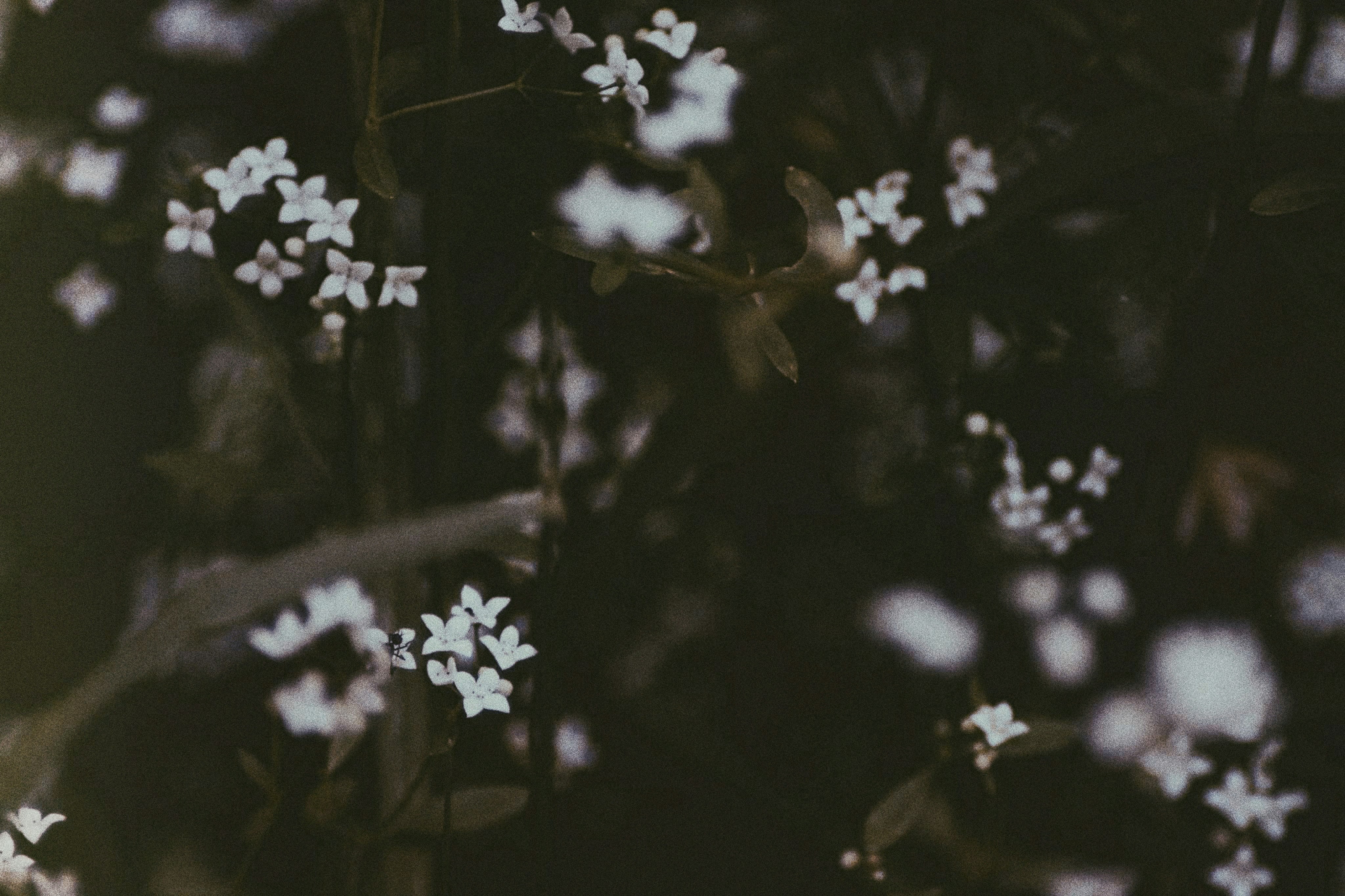
Persephone’s Garden by Hannah Birss
Every garden is a graveyard, every graveyard a garden. Persephone sings this to herself as she wanders through the cemetery behind her home. It is a lush place and as wild and as beautiful as she is herself. Everything is blooming in a rainbow of flowers, bright splashes of colour against the verdant green backdrop. It is a painting—a collage of every garden ever painted, ever photographed. The air is perfumed with the smell of wet soil, of grass and blooming, heady scents. The singing of unseen birds, the hum of insects, and the sound of the breeze running invisible fingers through the leaves all come together with her rising and falling voice into a beautiful harmony that flows throughout her small kingdom.
In the tray she carries in her hands, trailing flowers spill from small cups pressed together from coconut coir and peaty soil. She pauses at a spot where bare soil peeks through the dense foliage. She carefully places her tray on the soft grass and kneels down next to it. She can hear something; a whisper in the soil, a murmur like a heartbeat under the mulch, calling her and compelling her to answer.
She starts to dig down into the damp earth barehanded, rich soil quickly caking her slender hands. As always, her trowel is sitting forgotten at the back of the shed, gathering dust and cobwebs. She likes to use her hands—likes to feel the connection to her work, to feel her calluses build and soil underneath her nails. It grounds her and she enjoys the intimate connection to her work, a nurturing skin to skin.
She digs deep, pausing every few moments to listen again for the quiet whisper of what lies beneath the soil. She pulls out rough pebbles and bits of decaying plant matter, tossing them over her shoulder without a thought until her fingertip brushes against something smooth. She knows instinctively that this is what she is looking for—a small bone, long and sharp. A rib bone, probably from a vole or a mole or some other small rodent, trapped in the tunnels that have collapsed in on itself like its own decaying body. She sifts through the soil, more carefully now, but she doesn’t find any more bones. The rest of it is already gone, down into the belly of something else or carried off and scattered through the garden like small seeds full of sweetness and marrow.
She takes the rib bone gently, putting it in her palm and nudging it around, turning it this way and that as she examines it. It will grow something beautiful, she thinks to herself. Hers is not the only religion to take a rib bone and turn it into something new, but hers is definitely one of the oldest.
She drops the rib bone into a pocket sewn into the breast of her dress, and ties the pocket closed with a bit of a ribbon strung through the hole where an ivory button used to be. The button is a tree now, dripping with sweet and juicy fruit. She lost track of its exact location a long time ago. She can hear the rib bone beating against her breast, anxious now, and she hopes the sound of her own heartbeat helps soothe it.
She turns to the tray and pulls out a small leather bag nestled within the plants there. She weighs in her hand, and in the soil she had disturbed she pours out a small pile of grey dust. She mixes in the ash then—full of calcium, potassium, trace elements. There is wood ash there, a mix of elm, oak, birch, pine; she has swirled them together with ash from living creatures, human and animal, lost in forest fires or funeral pyres. When she adds it to the disturbed earth she can hear a gentle sigh on the wind. She answers it with a smile, and rises to walk quickly to the side of the garden, where Hades has built her a series of composters, small monuments to his love for her.
Demeter never understood why she and Hades chose each other, why they suit each other so well. Back and forth, back and forth they go, but there is no tug of war between the two God of the underworld and the daughter of the harvest. It is only a gentle conversation that flows in a circle, an endless exchange of gifts between them. The two of them move together in tandem, taking and receiving with each gentle kiss, every moment their foreheads rest together in the dim before dawn. He fills her composters with the broken, the old, and the decaying. She waters it, turns it with a pitchfork, and leaves it until it is rich and ready and ready to nourish the new. She uses her cupped hands to scoop it out, and walks back slowly to where she has dug her hole, where she drops it in with a mix of solemnity and joy.
Once again, she swirls it all with her hands until it is mixed together—a new colour on her palette of soil. She reaches without looking into her tray of plants and pulls one out. It was once a vertebrae of a small bird—sparrow, she thinks. The flower it bears is small and unassuming, but from it comes a beautiful scent, the base of the aromatic song of the garden. Common in number, but not without merit, for nothing is truly without merit. It will be perfect in this spot.
She releases it from the coir and peat gently, and plants it in the hole, spreading its roots out with careful fingers. She pushes the soil back in around it, patting it down gently.
She shreds the pot in her hands and places the remains around the bottom of the plant. She also has a very small watering can n her tray, something that Hades had commissioned for her from the Hephastus’s forge. It is very small and silver, engraved with their entwined names in an elaborate script. She picks it up and walks to the small babbling brook that intersects her garden. If she listens carefully she can hear the words it is saying as it spills over the smooth river rocks. Water has a long memory, and it remembers everything that has ever been whispered next to it. It tells her stories, whispering to her as she dips the watering can into its cool, clear waters.
When she pours it around the base of the plant, the water whispers encouragement to it, piecing together positive words as it is drawn up into its roots. She smiles down at the plant in its new home, wishes it luck, and moves on.
She continues in her digging and planting, wandering up and down the beds, head tilted and ears straining for the sound of bones. For each one she digs up, she plants an older one, repeating the trips to the composter and the brook. She could probably fill several buckets and do it all at once, but she likes the meditative process of it, the special attention and trips made for each bone. It is a ceremony almost as old as life itself, and she has the time. Within the borders of Hades’ realism, she has all the time, and no time at all.
By the end of the day, the pocket in her dress is rattling with remains. They spill over each other like dice with small clinks that sound almost like windchimes. She returns with her tray empty to an old weathered table set in the middle of the garden where piles of empty pots wait for her. She scoops potting mix into each of the containers, and then carefully plants a bone that she has found, drawing them out one by one and burying it safely. Warmth trickles down her fingers, her own brand of magic that pitter-patters like soft rain onto the expectant soil. She blows on it, and from each pot something green begins to grow, unfurling slowly. They are small and new, but that is how all great things start. She will nurture them for several more days before she finds them a new home within her garden. She beams, and picks up the tray for the last time that day to bring them inside, so that they will be safe when they are so small and vulnerable.
Her dog trots out of the garden from whatever adventure he had been on to walk at her side. He is absolutely covered in dirt, his tongues lolling in wide grinning mouths as he playfully barks at her. She walks back to the house, excited to show her husband the latest additions to their collection. She knows that he will slip his warm hand into hers as he delights in each small pot, and together they will wonder what these deaths will bring, what will bloom from the bones and the ashes.
She is sure that it will be something beautiful.