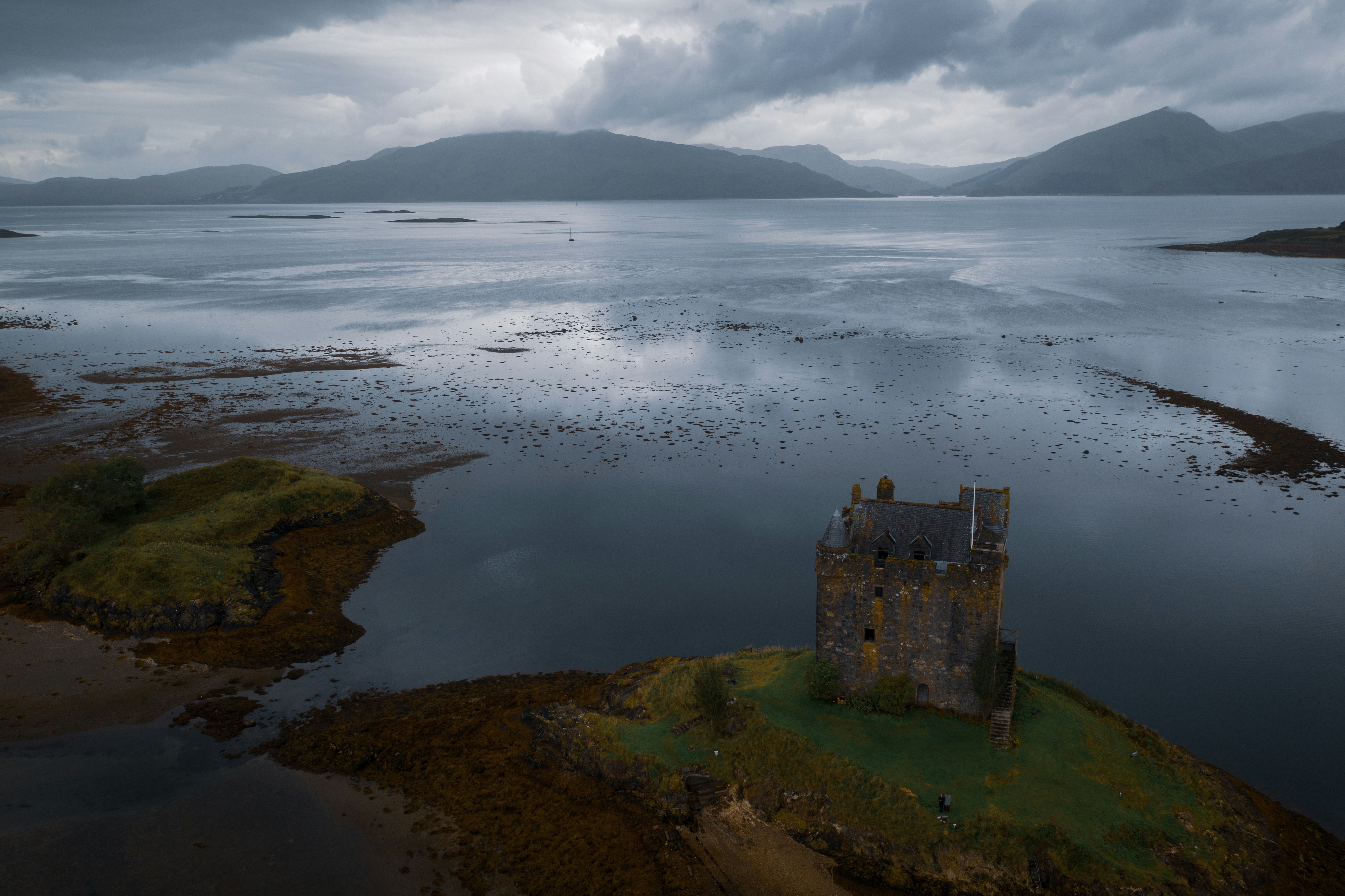
Photo by neostalgic on Unsplash
Tristan and Iseult by Stephen Lefebure
Courtly poets, singers on commission,
Sang of love – minnesangers swore it
As an oath – but did they really feel
More than we do? Make no such admission.
Passion and romance – surely we bore it
Hard when lovers hurt us – feelings real
As a tone that cracks when some musician
Has too much emotion to upstore it.
Notes may break before they can congeal.
Have you never sung and lost position
In the beat, behind it or before it?
That can even be a song’s appeal.
If Time were a book, and it had pages,
Could we touch those years when no one read
Words at all, when no one learned to read?
Years that we call dark, the Dark Ages.
Cornwall was aye conquered then instead
By Éirinn, a reverse we may concede.
The men of Éire land, soldiers and mages,
Had one Giant then that men would dread
Facing. Morholt did far well exceed
Others. Combats then were mostly rages
Without chivalry, were meant to bleed
And dismember till one man was dead.
I mean those years when people may have thought
Life had little worth, or was a thing of
Meager value, because people died
Young. The men whom Guinevere had fought
Stared it seemed on Earth, but saw whereof
Nothing – they were heads that she had tied
To her war horse Luan, draft horse bought
With a cote, a place for breeding dove
Hard by Corryvreckan where the tide
Races and unwary ships are caught.
Guinevere was married not for love
But to ally Picts to Arthur’s side.
Morholt came to Cornwall oft to take
Tribute from King Mark back to his nation.
Mark was from the Corneu tribe who came
From Wales to name a country for their sake.
No longer Dumnonia, creation
Of their own, they gave it a new name
From the island wall making a break
From the ocean surge, so their location
Became Cornwall underneath their claim.
Morholt took their tribute for the sake
Of his Éire land as an oblation.
Arthur further north heard of their plight,
Had a group of warriors who were
Large like him, not tall, and used
No swords (considered sissy for a knight
In those days) but axe or hammer.
Camelot itself (its name confused
Now) was Caer Mallot, whichever site
The Hammer, mallot, and its owner were
Castled in. Such men would be amused
By a sword, near useless in a fight.
Gawain, Tristan, Angus (we prefer
Lancelot for his name) – none refused
Arthur, but the man he sent was Tristan.
That knight rode to Cornwall from Carlisle
To help the Welsh and Cornish in their need.
Tristan urged a contest, better than
Paying tribute – much more like his style.
Mark was joyful at this and agreed.
That would be a death fight man to man.
Tristan asked to use a lonely isle
Where the loser would remain and bleed.
The duel was presented as their plan
To Morholt, though they would have to compile
Tribute – in case Tristan died indeed.
The island of Saint Sampson, in the Cornwall
Archipelago was chosen, and each knight
Sailed alone a one-mast fishing boat,
Morholt from Éire land, his father’s hall,
Arméd by his sister that he might
Use his jeweled mace in that remote
Battlefield where none would see the fall
Of the knight who would not see the light
Of dawn. Iseult was forced then to emote
Even though she wist that he slew all
Opponents – she shed tears for him in spite
Of reason, and found time enou to dote.
“Arm your soul, and arm as well your skin,”
She said, and sharpened up his mace with stone.
Its iron shaft concluded with a sphere
Crowned with spikes that ended at a thin
Point, embossed with jewels of her own.
She had bought them, rubies, hard by here
In the castle court, where she had been
Princess and physician, and had known
Every kind of wound a knight could fear.
Morholt was so large that he would win
Every time, but had cuts to his bone
She had sewn up often with her gear.
Morholt landed first, as Tristan knew
Beaching his own craft upon that strand.
A ghostly boat would carry forth the dead.
He staved his own oak hull, for one not two
Would leave. There on Saint Sampson’s island
Two hills join along a narrow thread.
This was the south hill. Buckled, then he drew
His hammer, and ascended in sand.
Seeing Morholt on the summit, he tread
Diagonally. Meant to come to
His foe stealthily on top – he planned
No fight from below – head on instead.
Before a battle, muscles are tighter,
Heartbeat faster, mind is clearer.
Air that we inhale seems colder.
Sun in the sky – does that seem brighter?
Life may end, so time is dearer.
One knight dies, will not get older.
Heft your hammer – it is lighter
Than it has been in your gear or
Raised aloft. Fear makes you bolder.
Shorter than Morholt. Never slighter.
In battle everything is nearer,
Even to a far-beholder.
Mace and hammer combine like thunder.
Leather armor over fine chain mail.
Legs well planted, straining their thighs
To push the other backward or under.
Neither allows his muscles to fail.
Too close to strike, so neither one tries.
Holds his weapon. Either could sunder
The other’s shield, but cannot avail
Chest to chest. The great Morholt has size
But Tristan draws his strength from wonder.
Like an arm-wrestle but on the scale
Of every muscle their bodies comprise.
Time does not pass while they are straining.
Birds are frozen as in tapestry.
Wind is captured, restrained in a cave.
Morholt tires – is Tristan gaining
Leverage on him? – I see his knee
Moving upwards, forcing the brave
Morholt backwards, his arms contraining
Morholt’s down until I can see
Them separate and clash – Morholt gave
A blow with his mace – but training
His hammer down on his enemy
Tristan split that skull in its nave.
Yet Tristan took his last blow dearly.
The mace embedded itself in his head
And when he withdrew that weapon it broke.
With the spike inside, it bled severely.
Tristan pushed from shore and made his bed
In The Morholt’s craft beneath a cloak.
Where he sailed from there was clearly
Not his choice, as the man was near dead,
But if his situation could evoke
Grace from any god, or his was merely
Luck, he sailed direct to the healing-bed
Of Iseult, and to her his head wound spoke.
At first she thought him just a soldier who
Death had nearly claimed, but when she went
With her tools inside his laceration,
She removed that spike which she well knew
Came from Morholt’s mace, now badly bent
But bearing still a ruby – donation
To that weapon of her own, which drew
Light into its fearsome crown, and meant
Blood, but for others meant damnation.
This anonymous enemy slew
Her famous brother Morholt, and fate sent
Hapless he to her, to her location,
Not so she could heal him, but to do
Murder? On a man completely spent.
Here he was, a patient in her tower
Of the castle, where she had her clinic.
Princess of the realm, they did not call her
Doctor (“learned man”) but in the hour
Of extreme distress, when they were sick
Unto death, each warrior below her
On her beds knew that she held a power
No one else possessed. Technique or trick,
Whatever herbs or lore could show her,
Those Death wanted so much to devour
Iseult could sew, would make their bodies quick.
With their lives thereafter they owe her.
She released him healed and none the worse.
Tristan then set sail upon the tide
Back to Cornwall, where he quickly told
About the princess who was such a nurse.
Said that she was beautiful, beside
Her skill in healing. That men could behold
Her from their bed made illnesses reverse.
Not Tristan alone, as well the pride
Of Éire land made all the court behold
Iseult. When many courtiers converse
Nobility may harken and decide.
King Mark heard those praises and was sold.
A wooing party was created then
By all the courtiers, with Tristan
As its main spokesperson unto Gurmun,
Sire of Éire land and lord of men.
Now a tribute to him was the plan
As before, before Tristan had won.
Wrote a panegyric to him when
Tristan met the King, more weighty than
The offerings which seemed to weigh a ton?
The gifts of gold and silver sent again
As in years before might help the man
Bear his loss, that of his only son.
Further, Tristan might beguile his fair
Court with tales of Arthur as he had
That of Mark – such stories were a lore
Appreciated for their magic, rare
Adventures, their impossible and mad
Landscapes, and implausibility, more
Fascinating when Tristan would swear
That they all were true, that he could add
Nothing to their deeds of love and war,
Their strange artifacts which were all there
In strange lands where famous armor-clad
Knights had used them, knew what they were for.
We would expect fine letters to be sent
To Iseult and Gurmun. None could write
Other than some monks or priests who were
Not even from Rome, but did invent
Out of pagan elements a quite
Different Christianity – a blur
Of goddess worship, aspects meant
For fertility – sex holds its right
Place to some extent, to not deter
Pleasure – this they later did repent!
The troop would thus surprise, sending its knight
For King Mark who would propose to her.
Reassured by now that every legend
In these tales is true in every part,
Assured before our tale has quite begun –
We must now believe and not amend
That as they prepared then to depart
They heard Éire land suffered a dragon.
That to any knight who would contend
With it and succeed their King would part
With his daughter, to the knight who won
That battle – wed Iseult and be his friend.
Tristan had good reason then to start
Combat – not a task he would have done.
They sailed north to Éire land where long
Ago only the people called “of Dan”
Dwelled in hills and trees and carved in stone.
Following reports of death along
The counties, leaving courtiers to plan
Speeches, Tristan rode almost alone.
Was there a time when dragons could belong
On Earth? The encroachment then of man
Everywhere had left them with no zone
Where they would not turn into a song
When carved by a hero from some clan.
Going where that dragon last was known,
Tristan smelled a reek and found the taste
Of destruction on a blackened field.
There against a hill the dragon slept.
What is courage but our fear displaced
When we cannot run away or yield?
The boy inside him ran as Tristan stepped
His stallion to the lizard through that waste.
“Leave this land, I charge you,” he appealed
To the monster, knowing dragons kept
Knowledge of all languages, and traced
Back before the moon had been revealed.
Disrespect would be worse than inept.
The serpent shifted each translucent scale
As he slowly woke to prophecy.
“You will be my death, but you will fall
Soon enough yourself, You will not fail
In battle, but you nonetheless will die
Of a wound inflicted on us all.
You will be as famous as the Grail
Parsifal pursues, not knowing why
The Kingship of the Grail must yet befall
Galahad his son when he is pale.
Angus known as Lancelot, the high
King, will bleed with Arthur at the Wall.”
“Arthur will be borne to Avalon,”
The dragon said, “a castle hard to find.”
From its country it is wryly said
One can see four nations, on
One side Éire land, but then behind,
Britain, and the land that Arthur wed
When he took his bride. Foregone,
You can see the land you are confined
In, the apple-country free from dread.
At its western edge one day at dawn
Spot the island God almost designed
As a castle, where assaults have bled.”
“Thank you for the future that we should
See, those of us who live long enough,”
said Tristan, bowing deeply to that worm.
Backing up a little, then he stood
Straight, and tried to look, well, if not tough,
Not effeminate, and so confirm
His courage, or to find it, so he could
Face this dragon, who could, with a puff,
Burn him to an ash. Hiding a squirm,
He said “I will oppose you, if you would
Honor my attack with your rebuff.”
All the while his voice and legs seemed firm.
“Let us meet in combat then,” our hero
Added. “Your words tried to tell me more
Than my heart will ever understand.”
“Later, you will understand and know
Everything of passion. Will adore
More than love could wish for or demand.
Life itself will marvel that you go
Beyond all limits ever set before
Mortals, beyond any measure planned
For emotion. Even long ago
And out unto the future’s farthest shore –
Your love is the one that will expand.
“Dying by your hammer is for me
As if love allows me to contribute
To a fate that makes this Earth more rare.
Adding to your legend lets me be
Part of your persuasion. Let the moot
Point be that Iseult will journey where
You and Mark reside, by the decree
Of her father. You present the suit
Of your king, but later you will care
More than you expect, and both will be
Stripped by magic no one can refute
To your naked Spirits always bare.”
“My name you know, and wist as well indeed
My fate, but it seems no more than polite
To ask after your own, how you are known?”
“I am a serpent scion of the breed
Draoidheacht Oilliphéist, enchanted quite.
‘Caoránach’ my mother called her own
Largest hatchling. I managed to exceed
Arach my father, and the soaring height
Of my mother Lien. I have grown
Beyond the size of caves, so now I need
Bowers of the forest in the night.
Thank you for this courtesy well shown.”
They faced off, that brave soldier and the scaled
Serpent with his wings and exhalations.
Tristan with his hammer and his shield.
Caoránach inhaled and then exhaled
Vaguely toward where Tristan had his station.
With nothing left to burn, the blackened field
Withstood the blast, Tristan’s large detailed
Shield caught fire, wood in full cremation.
Letting go the shield he had to wield
His hammer. Hurling it, he fairly nailed
The dragon’s skull, cracked to its foundation.
After long delay, the dragon keeled.
One farmer had a scythe, which he made use
Of, with no sword there, to remove the head
Of the serpent for the distant King.
Tristan found a cart, and had to choose
A mare out of a stable, poorly fed,
To haul the strange unsightly magic thing.
A dragon-slayer needed no excuse
To ride through Éire land pulling a dread
Enchanted monster – it was newly spring
And it took no minstrel to enthuse
The people. Now the awful worm was dead
And the population started singing.
He joined his courtiers and found Gurmun
Aware of his success. He now assigned
His diplomatic romantic request.
“I sent my knights to fight but sadly none
Returned from combat, so I declined
After some time to send more men, lest
No mortal could subdue that dragon.
I promised my daughter to all mankind
If any knight could fulfill that quest.
Now here you are with the task well done
But you ask that our kingdoms be aligned
In marriage – perhaps that is for the best.”
To to amuse that court and entertain
Gurmon, Tristan offered to unfold
Arthurian adventures he had heard.
“There was no Christmas then in the domain
Of Britain. Winter solstice had of old
Reached into the sleeping Earth and stirred
Depths so it would wake from sleep again.
The guests unto this solstice did behold
A giant in a byrnie green he gird
With a leather belt there to retain
An axe so red with blood that all were cold
To look on it, and could not speak a word.
“He issued forth a challenge, speaking fair,
Although his voice was low as if the boom
Of a thunderstorm spoke in immense
Syllables which shuddered in the air.
‘Brave and noble knights who fill this room,’
He said, ‘I may not tell you plainly whence
I come, nor what I am, but I will dare
Bare my neck to any here, from whom
I will take one stroke with no defense.’
There was a silence deeper than a prayer
Spoken in the heart, until the gloom
Seemed almost like fog, seemed to condense.
“‘There is a promise that I will extract
From the knight who may remove my head
If his arm and blade are of the best.’”
Gurmund’s court was shocked, and lacked
Words, but “ooh” and “my” were heard instead.
This tale had not been told to any guest
Outside Arthur’s realm, was told as fact,
And was like the tugging of a thread
From a tapestry that pulls the rest.
“‘If I survive, I ask him to contract
A year from now to meet, a place I tread.
And I will stroke him back to be his test.’
“Angus known as Lancelot was still.
Parsifal, Sir Bors, and Bedvedere,
Lamorak, Sir Gareth, and Sir Kay.
None of these arose to say ‘I will
Perform this stroke.’ In fear,
People froze and Arthur did not say
Which knight errant ought to make the kill.
Gawain pushed his plate back, had to clear
His chair back from the table to make way
For himself to stand. ‘It is a chill
Task to set when everyone is here
To celebrate a sacred holiday.’
“The giant said, again as if he spoke
From a storm, or as the voice of Spring
Buried in the Earth, ‘I thank your Word,
Knight. With that word Sacred you evoke
Those whom men call Dan, those who could swing
On breezes, lost religions once preferred
Before a new god coming here awoke.
I am he who used to be their king
But now have no subjects, an absurd
Survivor whom the future will revoke.
Thank you for your bravery as well. Bring
Axe, I will not die by stroke incurred.’
“Gawain felt his ax and weighed its heft.
Strode to where the giant meekly knelt
On the ground – inside that giant tent.
‘If I slay you, we shall be bereft,’
He said, expressing what those present felt.
All these knights have stayed because they meant
No harm – each warrior would have you left
Intact rather than be the one who dealt
A mortal cut that in one moment rent
Your head clean from your bloody body, cleft.
Nor would I, but this stroke must now be dealt,
At your request and by your own consent.’”
Tristan added, “I myself was there,
I, Tristan, but I did not rise to slay
That giant, and have no words to express
Why I was not brave in that affair.
Gawain brought his ax down all the way
Through that neck, and we saw an abscess
Larger than a tree trunk – had to stare
At the hole. Perhaps some looked away,
Did not see that giant find, caress,
Grasp his head and place it back on where
It was before the ax produced a spray
Of blood, as from a fountain, to address
“Those looking with his speech most courteous.
‘You who look on grimly at this sight,
Do not be afraid, for this is my
Rebirth, is what should happen, right for us,
We advocates of Earth and of the night.
You will be our death, and we will die,
And our death will not be glorious
Like Angus, nor like Arthur, as a knight
In battle – and we never will know why
You do not believe in, or discuss
The powers we have wielded with such might.
We will become the monsters you defy,
“‘Who were once the gods you asked for light.
Serpents, dragons, vast and ancient trees,
Springs and mountain peaks, even the ocean –
You beseeched us, begged of us the right
To inhabit here, asked all of these
Beings, with polite and true devotion,
To survive the perils of each night.
Sacrifice means make it Sacred, please
Beings who think only in slow motion,
Rivers, even mountains at their height.
We are sad to see you now appease
Gods who seem without any emotion.
“‘You who worshiped reproduction, lust,
Spring itself, the harvest, music, song,
Have your spirits withered that you now
Worship death? A god who dies, but just
Resurrects and leaves? Do you belong
Here, on this green Earth your farmers plow?
You worshiped female beauty. How unjust
And false it seems to say that you were wrong
Giving femininity your vow.
Do you love no woman, give your trust
To a vanished spirit, all along
Losing maypole, midnight, blossomed bough?
“‘Now I ask this knight, and know his name,
Gawain, without asking it of you,
Bravest in this strangest situation,
To rendezvous where Merlin of great fame
Guards a spring out east, where magic grew
As mist – effect without causation.
Meet me in one year and take the same
Stroke from me as I received, and do
This courtesy with no more explanation,
You whose bravery deserves acclaim.’
Gawain knew the place and would go to,
Go to at that year’s expiration.
“A year can pass so quickly when you want
Its days to pass like weeks. The giant’s Word
Troubled Gawain. None were really true
Christians there, but in the green knight’s taunt
There was a hard thing in it they had heard
Not just with their ears, and so it grew.
Do the folk of Dan exist, and haunt
The groves of Éire land where magic stirred
Without any spell that humans knew?
Do we here in Gurmun’s court, a font
Of legends, feel this loss that has occurred?
Gawain took the journey he must do.
“Took the stroke with valor. Did not lose
His head. His bravery in kneeling there
To display his neck was grit enough
For that knight. He took a minor bruise
And slice along the neckline where
The blade had scratched a narrow scruff
And left a mark. And to confuse
Gawain even more, after a scare
No one could ignore – no one is tough
When so close to death, in such abuse –
Then that knight said he would like to swear
Friendship with all Arthur’s knights, rebuff
War against them. Combat only whose
Cause conflicted theirs, because they share
Honor. All agree that death is rough.”
Tristan spoke unto an audience
Well used to a dragon in their land,
But unused to such magic as he said
Occurred – outside all their experience.
Therefore he was hard to understand.
Saying that a giant with no head
Rose up notwithstanding made no sense.
Yet there was authority, command,
In his voice, so they whispered instead
That this was not false but too intense
For them to absorb and to withstand,
So it stayed a wound in them that bled.
One there was however who could hear
Everything as if it were her own
Experience now happening to her.
She saw the Giant enter and appear
Frightening, and yet the way a known
Terror can be easy to deter.
The world by definition is right here
Next to us, so when its form is shown
As a giant man we may infer
It is not attempting to draw fear
But showing that it needs us, is alone,
Always needed us and who we were.
If world speaks in words and asks us why
We no longer love it we should blame
Ourselves for having pulled so far away.
As we age, do we no longer cry?
When we made our own world we became
Enemies to nature. We betray
Ourselves in almost everything we try.
This is what Iseult heard in the same
Story that the court heard on that day.
Saw that Tristan wanted to ally
Himself with what we cannot ever tame,
Meant more than his eloquence could say.
He saw her watching him but neither knew
That this cause would bring them both together.
Rules and laws – the spirit world is dying
Because we never know just what to do
For the trees and animals. Whenever
We attempt to help we are applying
Our beliefs and dreams that are untrue.
This is why the world showed we can sever
Its own neck, but must not go on lying.
Iseult and Tristan understood a new
Way to live and die that lasts forever.
Mere existence is more terrifying.
A wedding dress was fashioned up and sewn
For Iseult, and for her retinue
Fine new dresses tailored up and made.
Erin people, also Cornwall’s own
Were packing up and making do
With items; final purchases were paid.
They embarked off an enormous stone
Breakwater assisted by a queue
Of courtesans dispatched to give them aid.
On the voyage Tristan was alone
With Iseult, and in that time they knew
Each needed the other, were unmade.
No love potion happened. Those two when
He was wounded, in that circumstance
Met before – but as if he were not
Himself – perhaps already, even then,
Kindled admiration at first glance.
He the warrior whose wounds had brought
Him to her in need, and she a woman
Of her time, but learnèd, to enhance
Her beauty, which itself could well have caught
Bachelors, but woven could begin
On a deepest level, like a trance,
Love beyond what anyone has sought.
Standing now together, not in pain,
Able to express in words their great
Admiration for each other’s deeds,
She no longer needing to refrain,
As his healer, having to await –
He who was the dreamer who concedes
That his dream will happen once again,
That the time is neither soon nor late –
Now this moment beckons to them, leads
On to where insanity is sane –
Something in us tries to find a mate
Made for us, our other self, who needs
Us the way a thirst desires rain.
Standing just a little way apart
From each other, with the wine they toast –
Merely an excuse to be together –
Currents on a map are just a chart
Of our longing, being close, almost
Joined, but separated by rough weather.
Undercurrents, riptides, where the smart
Sailor watches shoals along the coast
As a sign of reefs no one has ever
Mapped, a danger to his ancient art –
Is not every one of us the most
Lonely human being altogether?
Who among us can control their heart
When it says we will be like a ghost
If we do not fall in love forever?
No potion mixed by any sorcerer
Made this man betray, made him resent
His king. Nor no incantation whence
Magic came made any drink for her,
To make Iseult adore and give assent
To forbidden love that made no sense.
Love needs no excuse and will prefer
What should not exist to the consent
Of authorities and their pretense.
Iseult had something like a whisperer
Inside who told her that her life was meant
To love, so love itself could grow intense.
Landing in Cornwall, met by the King
And Mélot, he a knight most envious
Of Tristan, they were brought into the hall.
Minstrels were right happy then to sing
Of Tristan’s victory, stewards to bring
Victuals, fine maidens made a fuss
About the dragon, how did he appall?
Through this Iseult and Tristan try to cling
To each other, knowing it a plus
That he is her escort through it all.
They arrange to meet beside the spring
Which feeds the castle, where they may discuss,
Late at night, how to escape withal.
Later in the forest park behind
The castle precinct, with Iseult, Tristan
Let his heart expand into the vast
Stars which are completely unconfined.
“Iseult, there is no other lover than
You – you are as if the silence asked
For a perfect woman – well designed
To be the greatest hand at medicine,
As well as beautiful.” “Even the past,
Tristan, with all its warriors aligned,
Has no match for you, the perfect man,
Warrior and lover, here at last.”
“Iseult, you are so beautiful and so
Admirable that the heart cannot
Merely wish to hold you. I need your you,
Who you are inside. My heart is caught
In your pull and everything is for you."
“Tristan, I will never let you go.
Men are violent, ignorant, have sought
Women for their bodies. There is more you,
More by far to love. No one can owe
More than all they are, and I have brought
That because I desperately adore you.”
Hard perhaps for us to understand
What they did, how hard it was to feel
That our life, this consciousness, what here
We are now, attempting to expand,
Is meaningful, is even fully real,
Because their age was dictated by fear.
Everything one did was by command
Of nobility or church – to kneel
To them in submission and adhere
To the framework given in that land,
That country where your heartbreak did not heal.
They chose more than love, chose to revere.
“There is a kingdom that we walk toward,”
said Tristan, and the darkness made the sound
Die as if it had not yet been said.
“A kingdom where someday I will be lord.”
“I know this Kingdom, Tristan, all around.
All men know the Kingdom of the Dead.
You will be my husband there, adored
Beyond all men that women ever found
Since the first man’s drop of blood was shed.
Beyond all borders, never yet explored,
You will rule there because you have bound
Silence to the words on which it fed.
“This will be your gift to me and my
Lifeless body will be my excuse
For a dowery, for we have to leave
All my father’s treasure when we die.
What do we bequeath? A hollow truce,
Two unmarked graves where nobody will grieve,
Interminable rain down from the sky,
A warning. If life wishes to seduce
Others such as we to now believe,
Your kingdom has an entrance there hard by,
So they can join us quickly and produce
Subjects you and I may there receive.
“Yet you have fed more Being to the curse
Of emptiness than it can digest.
We have started something so that all
The world will stop its course and reverse.
Now the heart will never be at rest
When it hears the other person call
To it clearly. It has to immerse
Its soul into the other person’s breast.
This change will be slow, but will befall
Every human being – in a verse
Poetry will say what many guessed,
That true love flows like a waterfall,
“Is worth more than wealth or family,
Honor or long life, because all those
Give a joyless life that ends the same.
It is henceforth not enough to be
Bigger than one’s empty childhood clothes.
The three estates are now a worthless game
Spent in subjugation, on your knee
To someone you know you never chose
As your lord. Our love defeats this shame,
These years of prayer and worthless fealty
Where fear is primary and your life goes
Away in moments you can never claim.”
“You understand, Iseult, and you express
More than this brute soldier ever could
What our raw emotion here has wrought.
People never knew their own distress,
Farming, hunting, stacking firewood.
Their distress was that they never thought
Life was something precious to possess.
No one told them that they ever could.
In words and by example they were taught
Never to ask much, not to undress
The spirit and the body as it stood
Asking to be held and to be caught.
“All those people who have power,
Who restrain the Third Estate,
All those godheads new and old,
Let them fear now in this hour,
Things will alter for the Great.
Stand on hilltops of the wold,
Release the song that will devour
All our pain that has no weight.
Spirit cannot be controlled
When it chooses to be our
Self and tells us not to wait.”
On each moonless night, we take this lie
To be self-evident: that human laws
Own our feelings. That we have a test
To gauge our sentiments or even try.
Emotions are all infinite because
Being has no place for it to rest.
World is not its home, and we all die
Alone. Experience can never pause
Life. Our language never has expressed
What it was invented to deny.
Words and music, art, and their applause
Hide the subject they have not addressed.
God is larger than theology,
Lives inside our bodies, our desire,
Lust itself and love, is not outside.
Spirit can expand more than it would be
If we were our bodies and could tire
Of existence, of how hard we tried.
Now the challenge can be understood. Be
Unafraid to set yourself on fire.
Life itself must never be denied
In its needs, its loneliness, or would be
Wrong. We say in truth our life is prior
And more urgent than what men decide.
In the midnight watches that we keep,
If one of us cried, and no one heard,
Because in all that space there was no Spirit
And the night closed on it like the Deep –
Would that cry be better than deferred
Anguish, with no voice that can adhere it
To the endless silence that must weep,
Weep with tears alone, because, interred
In darkness, darkness cannot hear it?
Better to cry out then, though the leap
Into Being hurts more than the Word
Of God. Being hurts, but we revere it.
Still inside the dark perhaps it may
Happen, we may someday hear a cry
From another like us, are awoken.
Sound is heavier than things can weigh.
That will be as if a world would pry
Open giving up its Heart as token
That it has no Word that it can say.
Crying – no one needs a reason why,
Offering their Heart which life has broken
As the currency their soul must pay.
In all this loneliness before we die
Spirit often spends its life unspoken.
By that spring where they met long ago,
Mélot led a group of soldiers to him,
Tristan, he who brought Iseult to Mark.
“Traitor,” Mélot cried and drew to show
His blade, but Tristan who well knew him
Took unarmed that sword-thrust in the dark.
Kurwenal, a friend, helped them to go
From that place, where Mélot almost slew him.
Behind them with his group the monarch,
Anguished at that violence, tried to know
What had happened? Did the woman woo him?
Trying to recall each mild remark.
Tristan could not walk. They had to steal him,
Iseult and Kurwenal, from all the other
People in the park, into the forest.
They found a peasant hut there to conceal him,
Where they bound his wound, and felt another
In his back – that sword ran through his breast.
Stripped and washed him, had to turn and feel him
Everywhere. The people there, the mother
Helped by boiling water for their guest,
Famous, so they asked, “Can they heal him,
Tristan?” A sister and a brother
Idolized him, far above the rest.
If there is a power in the Earth where
Gawain’s knight arose – if we are near it –
Let that help them now, before pursuit
Overtakes them – if the wind can care
Let it hide them all before they hear it –
Hear the dogs and men, hear all the brute
Force that hunts down lovers everywhere –
If animals could wake and feel the spirit
Humans feel, could speak, and were not mute,
Then the world itself could be a prayer
Of astounding force – so that men fear it –
Protecting these whose need is so acute.
After many stitches it was late.
Kurwenal removed him to an island,
With his wound bound tightly, but inside,
Blood was spilling out. Yet in that state
They drew up upon a shattered strand.
Iseult would follow with her kit – had tried
Without medicines to halt his fate
In that shelter. We must understand
Shock and grief, the tears which had not dried
As she sewed his back to stop the great
Flow of blood. No art at her command
Could heal the groom so she could be his bride.
On that shore, world itself was broken.
Not that people felt, that people feel
Grief, not that all grief is without limit.
Lying in that skiff, inside its oaken
Staves, he could not rise to make appeal
To forces as we do, we who admit
Gods or spirits, we who kneel in token
Of submission, hoping gods are real.
In that world where words were never writ
Down, his story started to be spoken
Even as he died, because we deal
With our life through legends which explain it.
Princess of Éire land, one who could heal
Wounds which would be mortal in the hand
Of any doctor – she came late and found
Tristan on his back, and bent to kneel
With him on that isolated strand,
Dead, but bloodless, as if he had drowned.
Does the world itself know how to feel
That something is wrong, and understand
When its life and ours are deeply bound
Together – are these ancient legends real,
Spoken by the Earth, at its command?
Iseult released her Spirit to the sound
Of the surf which pounded into meal
All the hearts then beating in that land,
Leaving these mere things we see around.
Is ours a world where spells can still be cast,
Where the Earth can rise for us and speak
To us saying words that we can hear?
Are miracles and magic in the past,
Only in old stories, in antique
Tapestries, quaint objects that are queer?
Spirits come although they are not asked,
Stand in front of us, or in oblique
Corners so they do not quite appear.
We are not the first and not the last
To gain knowledge that we did not seek
From unexpected sources very near.