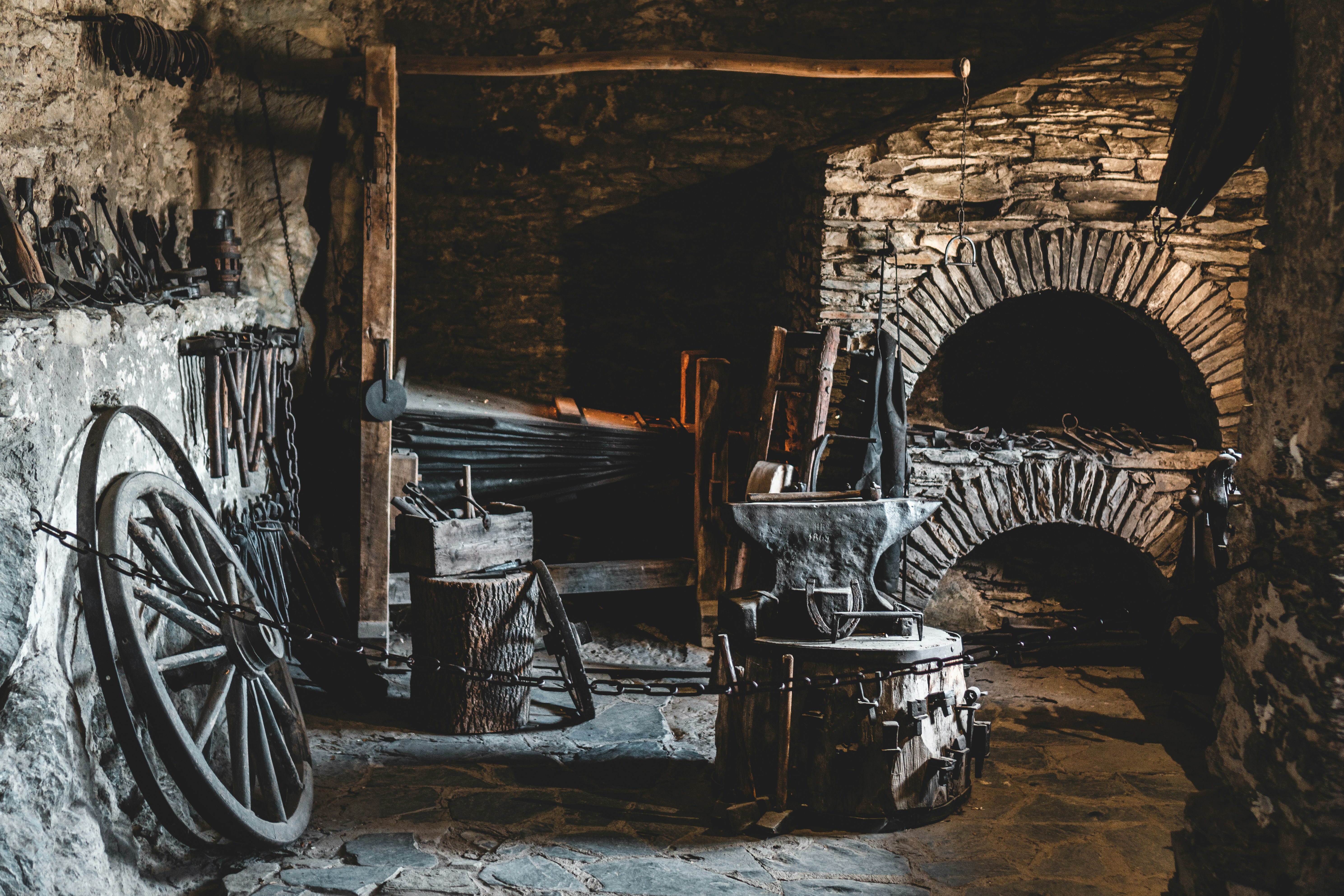
Photo by Jonathan Kemper on Unsplash
Vulcan and Venus by LindaAnn LoSchiavo
I.
The first time he saw Venus Vulcan loved.
She was a flower, petals arching back,
Intent on showing off its pollen tease.
Without her in his life he’d be a dead sea
That’s drying up. Without her as his wife,
The god of fire suspects he will amount
To merely supervisor of the clowns.
His smithy’s flames were never this intense.
Those passions of extremity, he knows,
Have rendered subsequent existence pale,
Her image driven into him hard nailed.
II.
Rejected by his mother at his birth,
Young Vulcan learned to prize what she despised
About him most: a lack of perfect form.
All unappreciated metals shine
With application of attentiveness
From a loving smith who’s known as Juno’s son—
Without her panic of the unconvinced.
And beauty undetected, iron-bound,
Excites his sense of possibility,
Creator of the shield of Hercules,
And fatal necklace of Harmonia.
III.
But genitals are tools men use to forge
Their future with. Unused, this tool becomes
Another artist who let talent waste
By vacillating till all models died.
The author of his sorrow Vulcan’s hands—
His craftiness—could be, as what’s ignored
Inside awaits repair. By day he works
Impatient hoofs’ new shoes—for Pyrois,
Eous, Aethon, Phlegor—ordered
By a busy god, the Sun. His hammer seals
What’s pried apart by clarifying dark.
IV.
The first time he saw Venus in the sea,
He focused on her unreflective side.
Like sparks, she seemed: so dangerous to the eyes.
With specks around her, he identifies.
Perfection outlined her physique as if
Someone hung “Seek No Further” on her chest,
And Jove’s unloved lame son adored such form
That would need nothing from him to convince
The world of its tremendousness. He who
protected others—with their necklaces, arms,
Shield, scepter—finds himself ablaze, disarmed.
V.
The first time he held Venus in his arms,
This god of fire felt her stylish flesh
Was unencumbered by a conscience, not
Unlike his mother with her unused heart,
Who’d never know the worried pounding, know
His sorrow stuffed with silence and dark wind
Like a stomachache that doesn’t quit. The gods,
He knows, can’t die. And yet her busy womb
Is certainly the tomb of harmony.
His body rocks foundations of the forge,
Struck anvils baying, "Cuckold!" in his brain.
VI.
The last time he caught Venus in their room—
Another lover riding anvilled hips—
Lame Vulcan felt fenced in by fate, lovestruck.
Unloved, his heart had rooted easily,
With childishness that parented his hopes.
The goddess who is love loved him perhaps
No better than all else. Their partnership
Had seemed in ashes till she comes with news:
Their son is due—winged Cupid. He’ll create
Arrows, equipping hands too young to have
A conscience. Forger Vulcan tools revenge.